Grace Jensen, Digital Production Coordinator
.png)
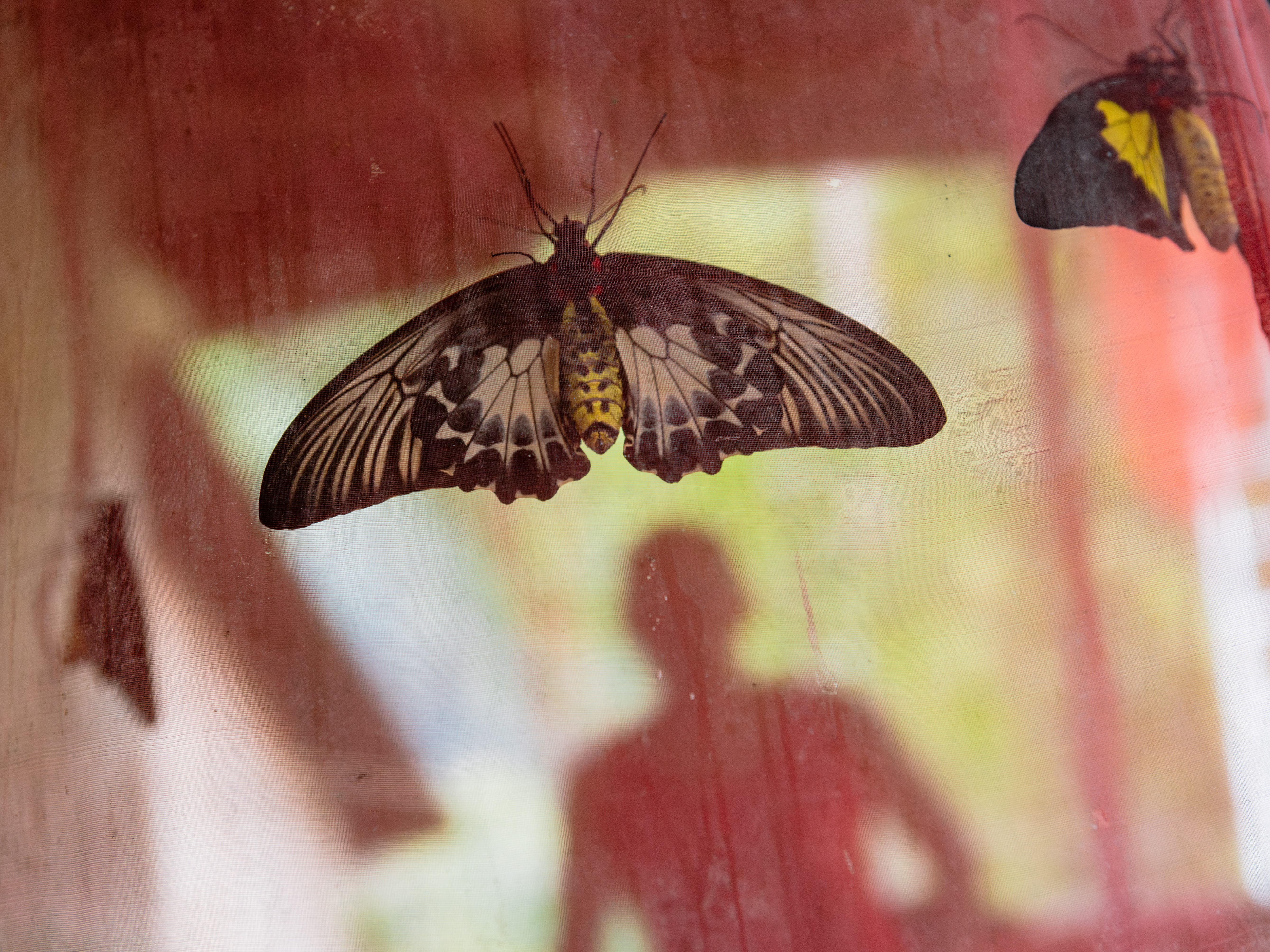
The second generation to run the family business, Ongen breeds, hunts, and supplies various exotic butterfly species from eastern Indonesia to various countries. In Indonesia, lax regulations for the protection of wildlife and the environment is putting the country’s biodiversity at risk.

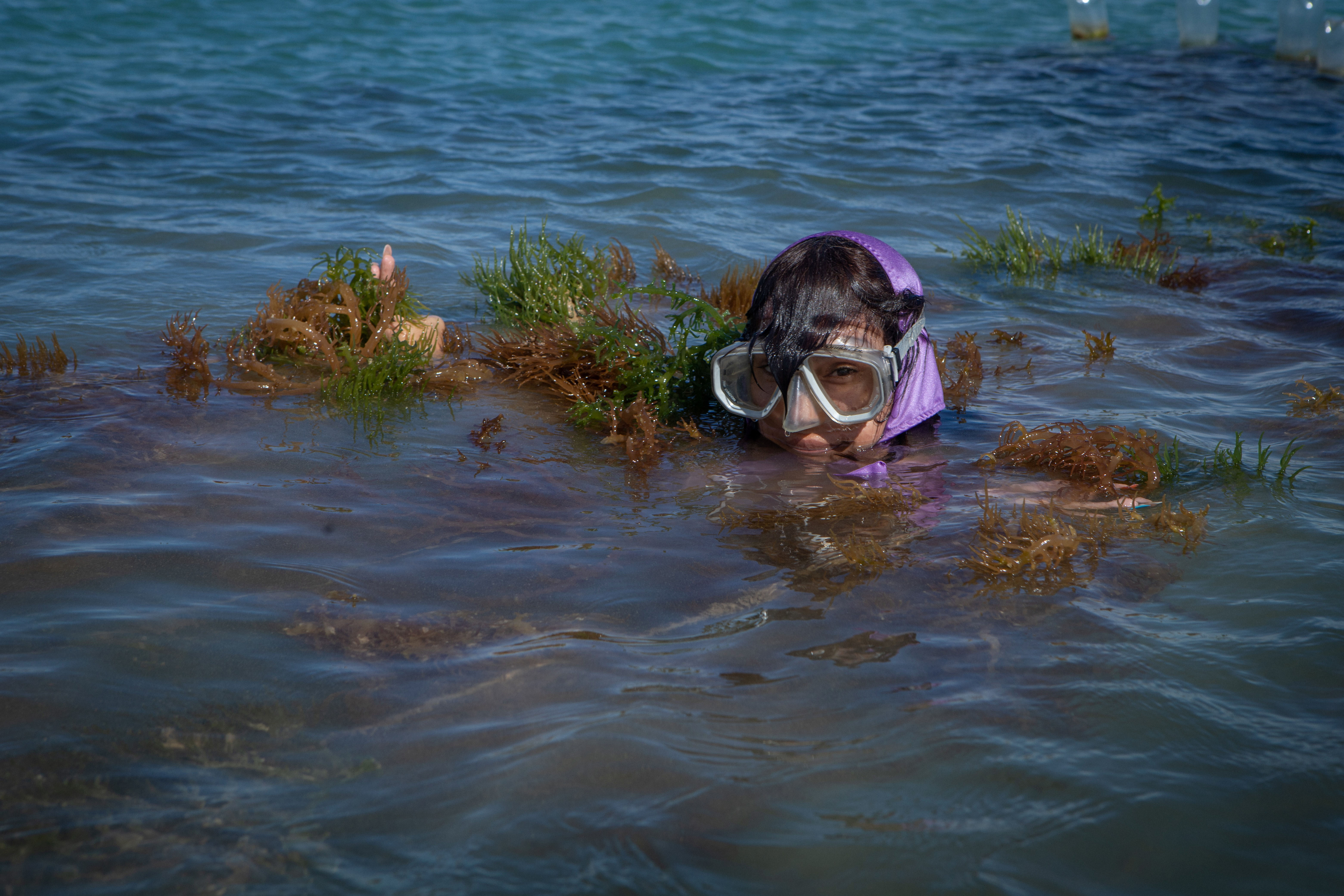
According to an internal government report from the Socialist Institute of Fishing and Aquaculture (Insopesca), the artisanal cultivation of red algae has tripled in the last year, and exports have increased fivefold. This market boom benefits large companies, leaving small harvesters like the Silva family behind in a trade that earns them only $10 a day.

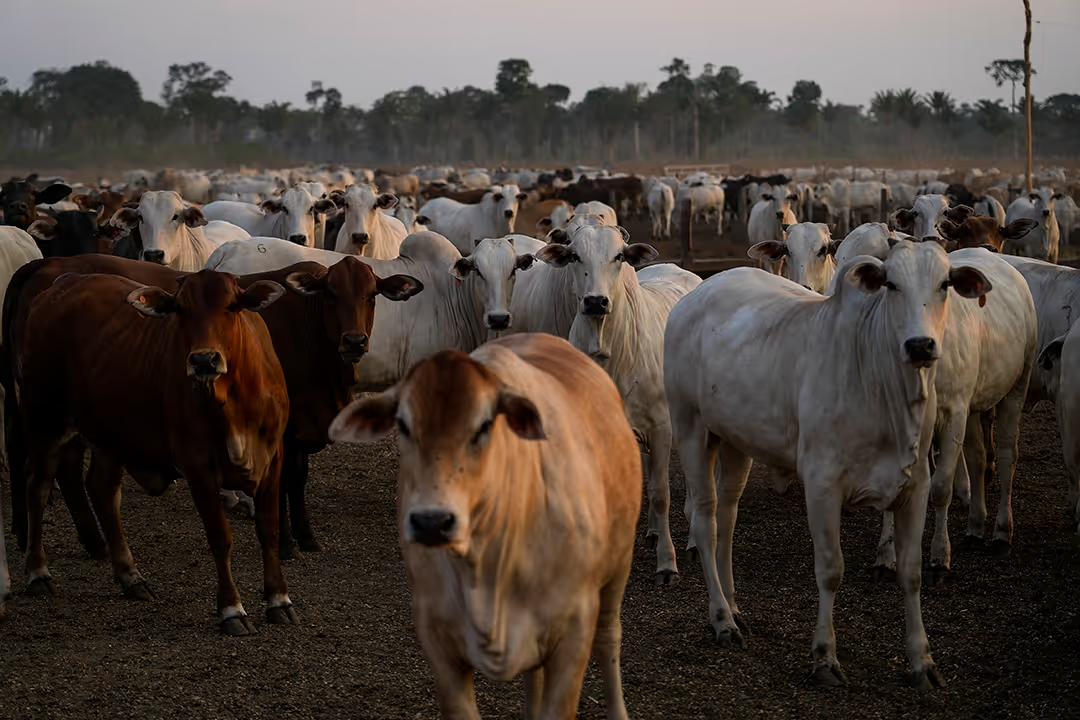
Brazil’s second-largest meatpacking industry, Minerva Foods, has direct ties to a destructive supply chain in the Amazon. In Rondônia state, where cattle suppliers have been linked to the depletion of the Tanaru Indigenous Territory, the corporation has invested in bonds that fund agro-industrial operations.

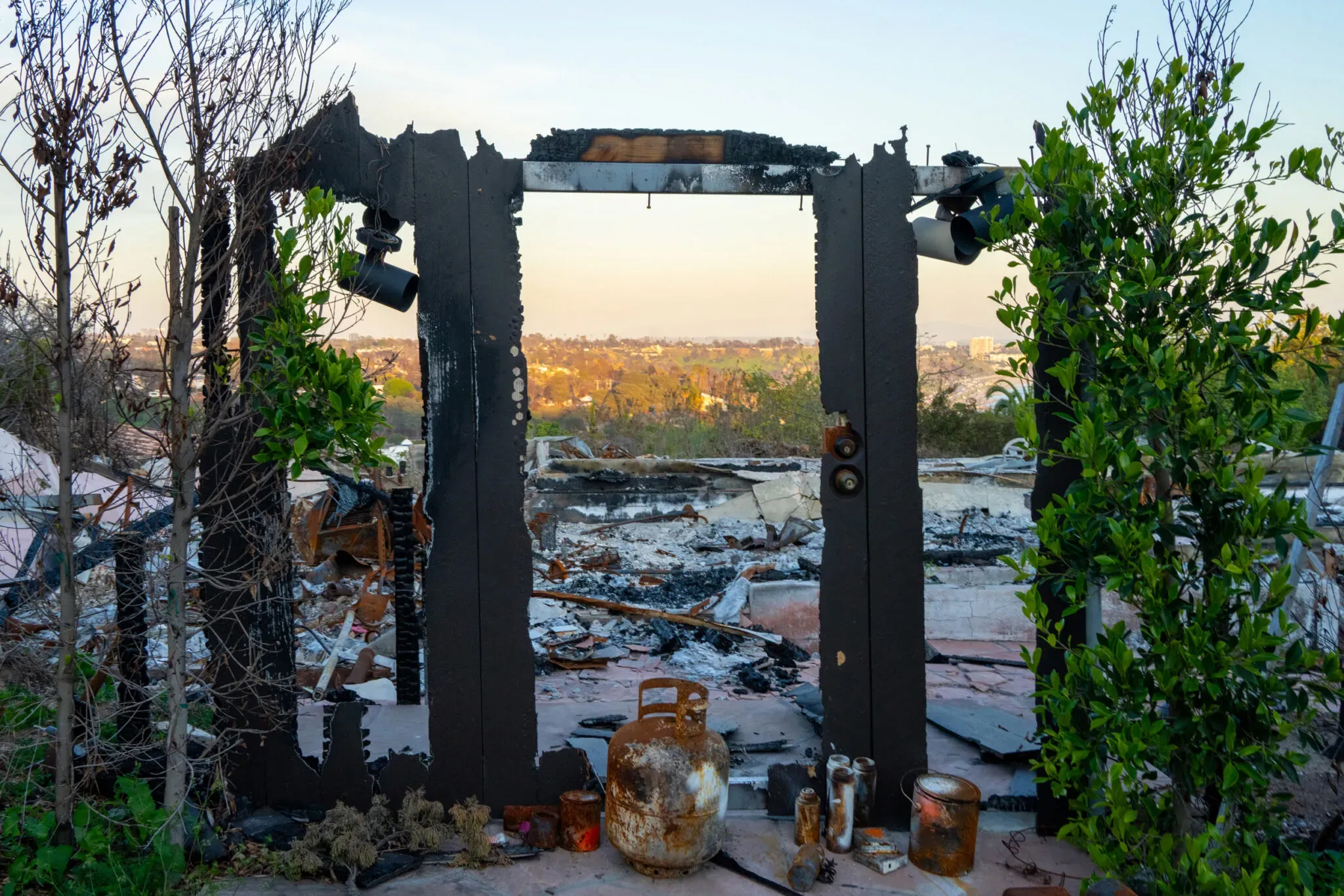
All that remains of 224 Quadro Vecchio Drive in Los Angeles is the front door frame. Six of the 13 homes overlooking Los Leones Canyon burned January 7-8. Neighbors recounted to journalist Nina Dietz their experiences of escaping the fires—and their return to the ruins—in the Pacific Palisades neighborhood.
"It permanently alters your perspective of wealth and value when all that remains of a multi-million dollar house is an empty door frame and the spectacular view of the canyon it once overlooked.
There’s something about a ruin like that—clean, almost minimalistic in the worst possible way—that forces you to acknowledge how disasters reveal the skeleton of a place and all the choices that shaped it long before the fire ever started."
Nina Dietz

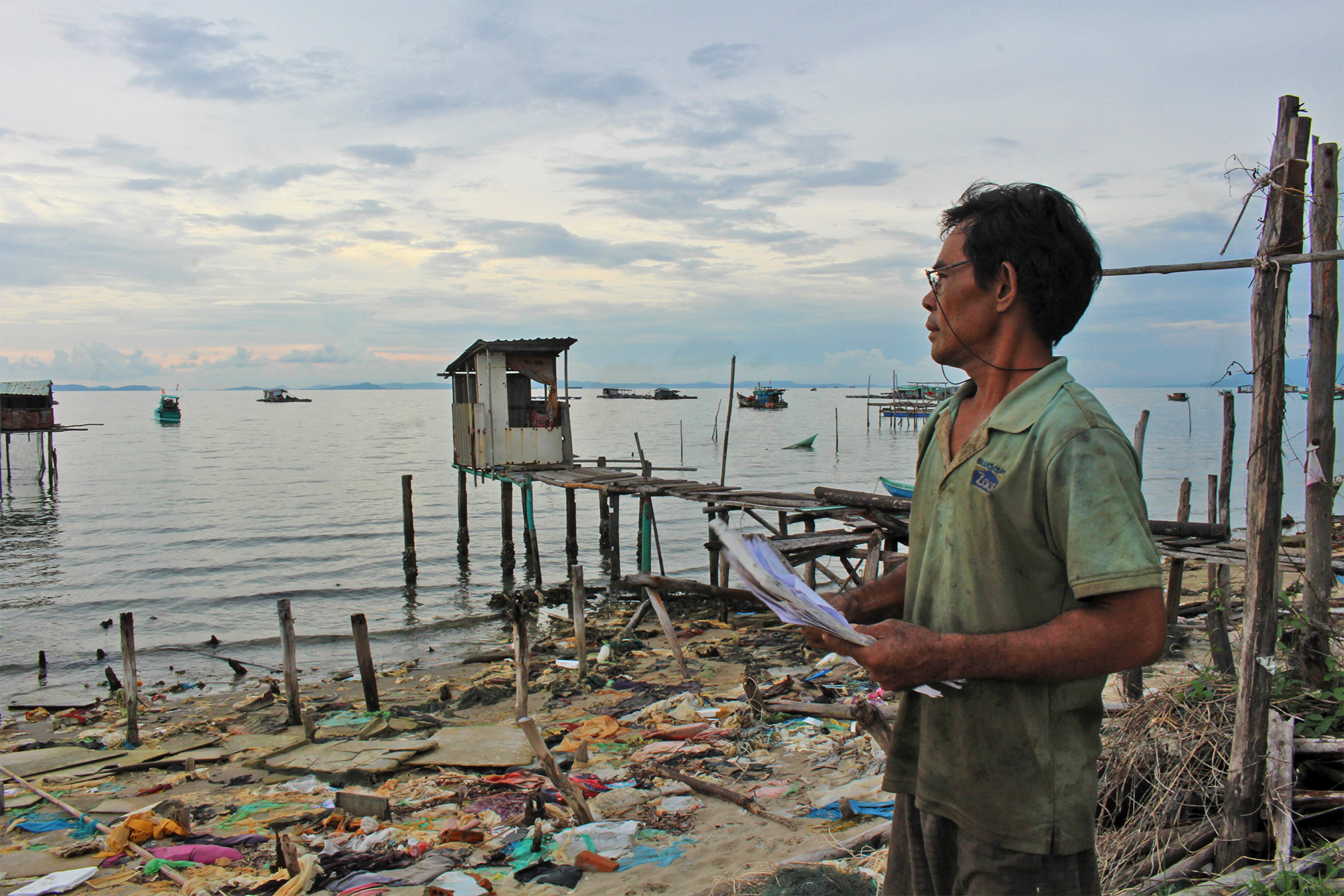
Huỳnh Ngọc Vân is shown at his old seaside home, surrounded by demolished houses on Vietnam’s Phú Quốc Island in late April 2025. Since a 2024 change in regulations, the island has seen 286 project approvals for tourism and residential development, displacing hundreds of families and clearing hundreds of acres of protected forest.

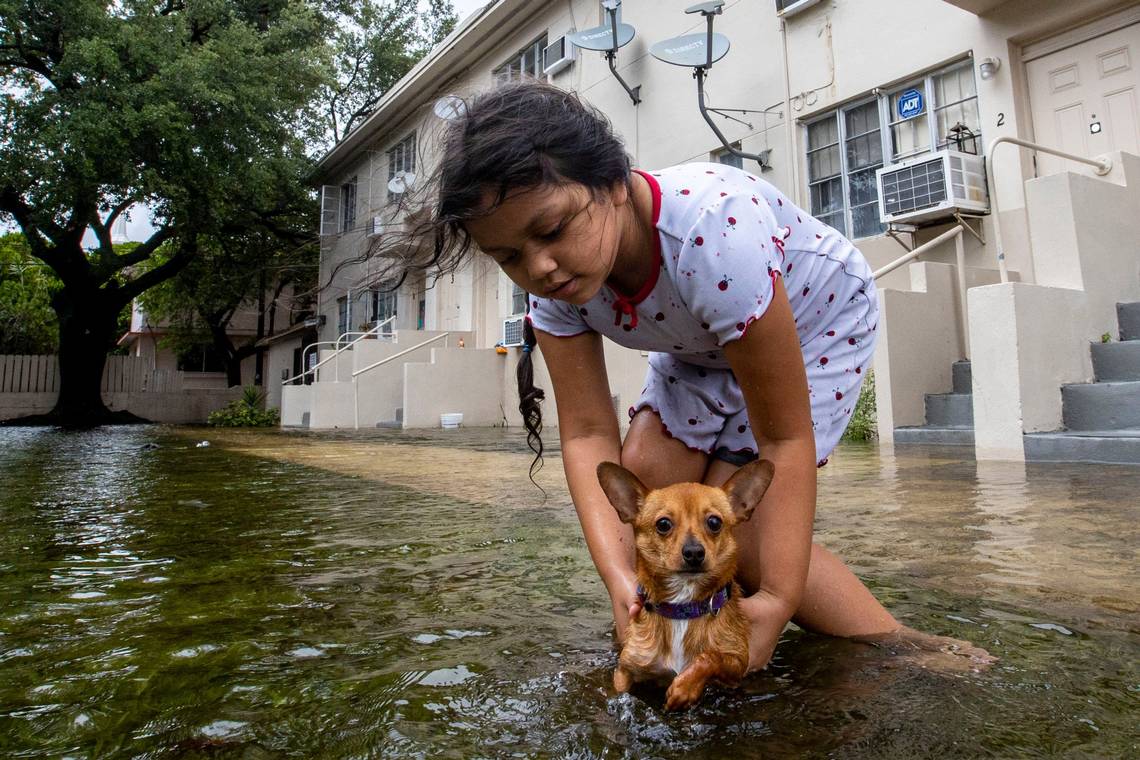
Mileidy Erazo, 6, holds her dog, Canelo, as he swims in floodwaters near her apartment in Miami’s Little Havana neighborhood after a summer flood in 2022. A Miami Herald investigation revealed that in a state with massive amounts of vulnerable residential real estate, it’s difficult for the public to identify flood-prone neighborhoods and streets—and nearly impossible for prospective buyers to find the history of individual homes.
.avif)
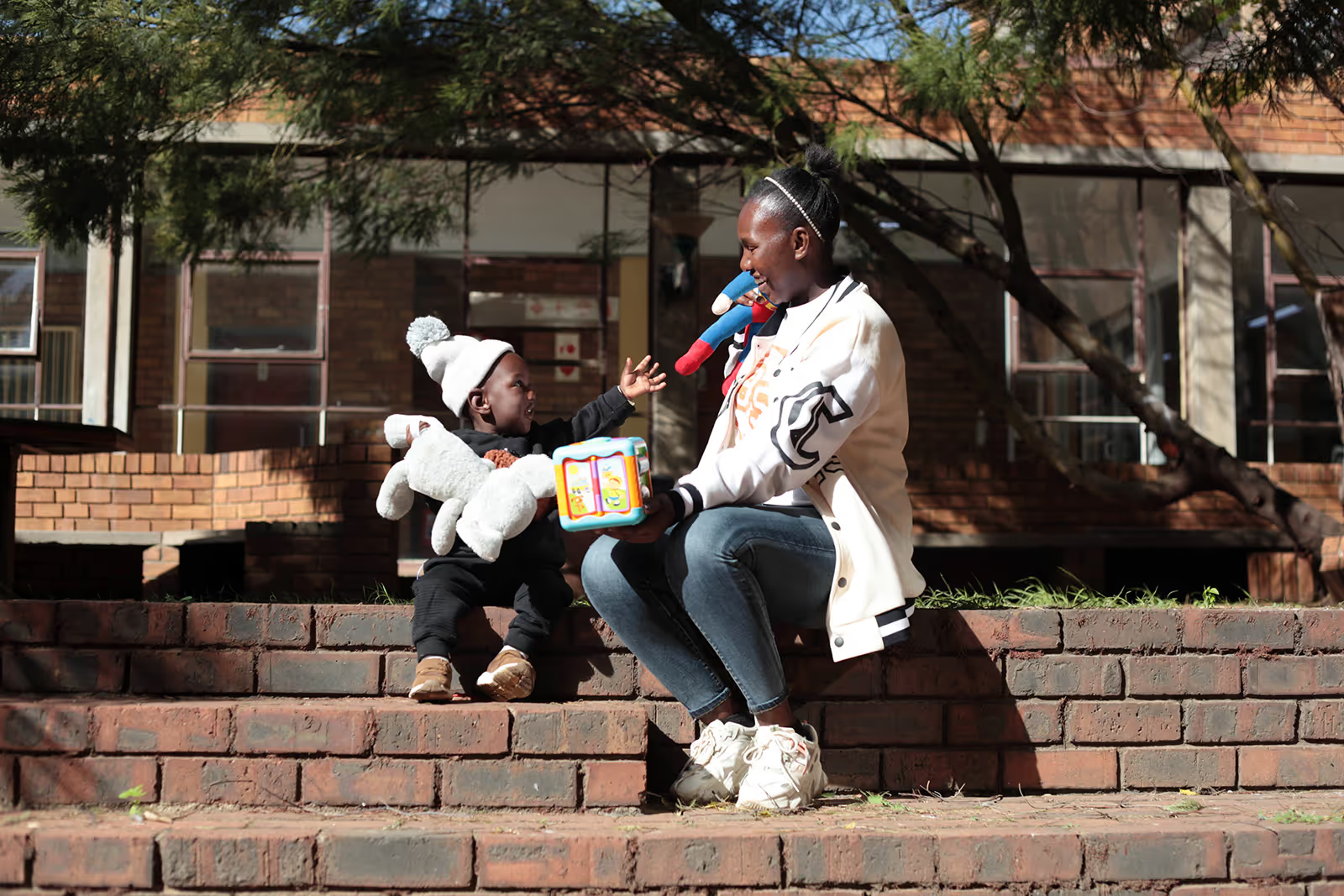
Alcoa’s request to expand mining in Australia is drawing objections from scientists and the land’s original inhabitants. The ore beneath Australia’s Northern Jarrah Forest fuels Alcoa’s $12 billion global aluminum operation. As demand surges, the Pittsburgh-based metals giant wants approval to mine more land, but the forest has already been taken to its knees by a warming world and decades of deforestation. Scientists say further loss threatens total ecological collapse.

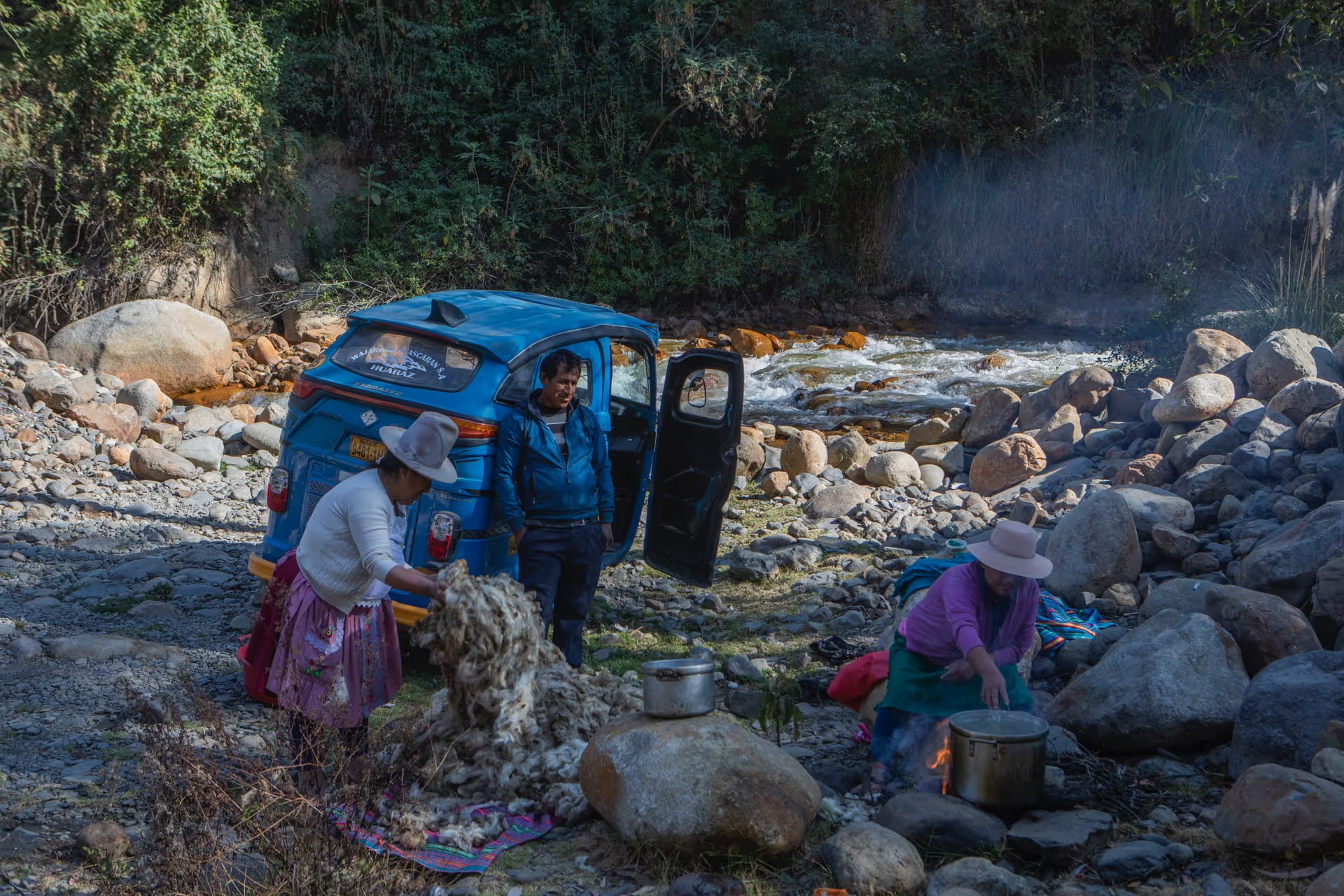
Residents of the city of Huaraz, Peru, wash wool in the Quilcay River, one of several glacier-fed streams in the Cordillera Blanca mountain range that flow with oxidized waters due to acid rock drainage. Locals remember when the water carried trout and ran crystal clear. But as global temperatures have risen, the Cordillera Blanca’s glaciers have shrunk by nearly half in the past six decades, and towns from the highlands to the coast now receive diminishing flows of freshwater.
"Este proyecto surgió de la necesidad de recorrer la Cordillera Blanca, desde el origen del deshielo hasta las comunidades que dependen de sus aguas, para comprender cómo el retroceso glaciar está alterando tanto la vida cotidiana como el ecosistema.
A través de la fotografía del color del agua, las huellas dejadas en la tierra y los testimonios de quienes ya no pueden beber de sus ríos, quise hacer visible una crisis ambiental poco conocida y documentada. Para mí, este proyecto es una forma de hacer tangible una crisis ambiental que ya está ocurriendo y que exige atención urgente."
"This project arose from the need to travel through the Cordillera Blanca, from the source of the meltwater to the communities that depend on its waters, to understand how glacial retreat is altering both daily life and the ecosystem.
Through photographs of the color of the water, the marks left on the earth, and the testimonies of those who can no longer drink from their rivers, I wanted to make visible a little-known and poorly documented environmental crisis. For me, this project is a way of making tangible an environmental crisis that is already happening and demands urgent attention."
Marco Garro

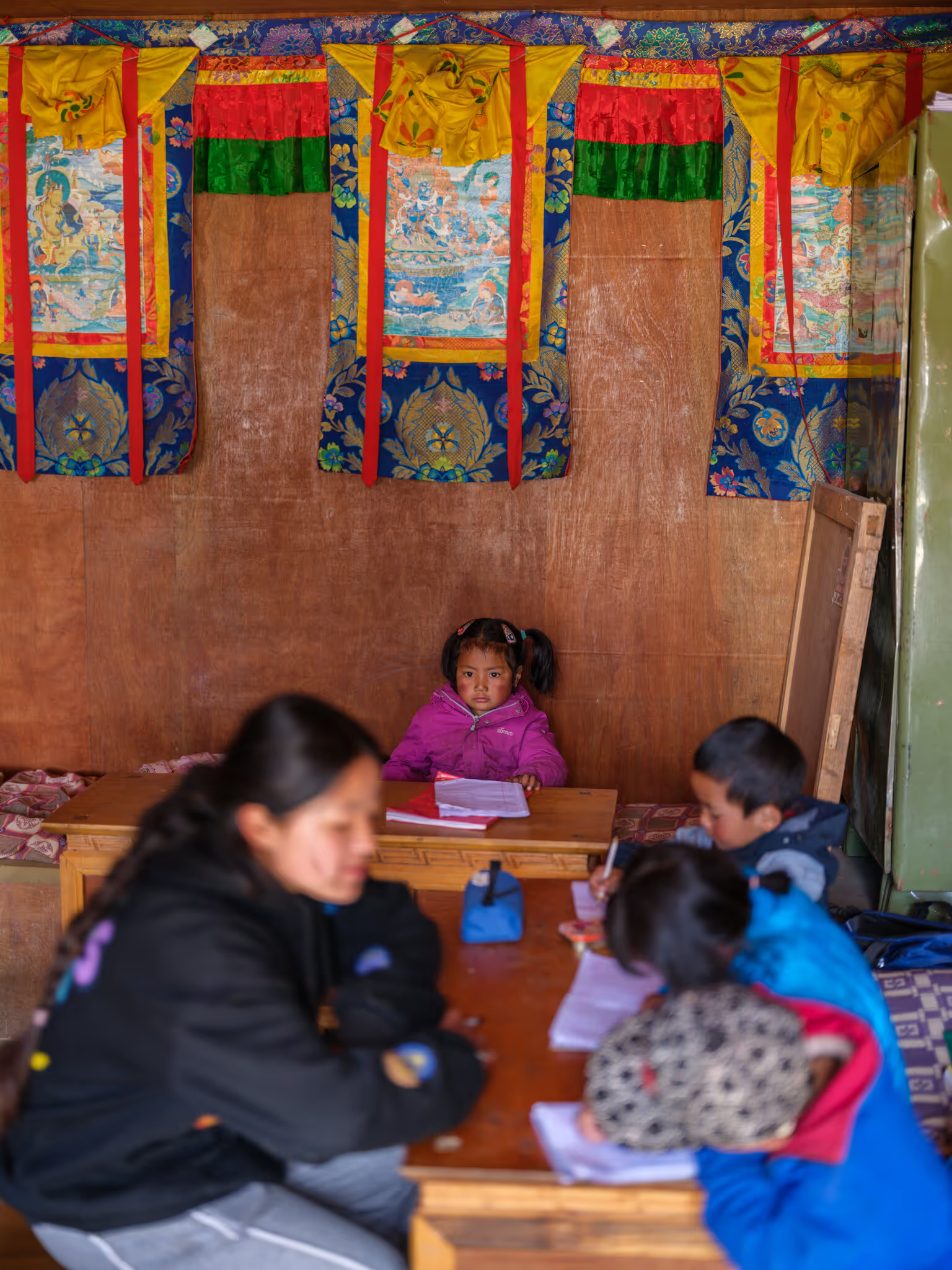
Thame, a secluded village of 370 people, sits in a valley in the Everest region in Nepal. Glacial melt had been pooling rapidly in a high spot above the village for more than a decade. One summer day, people in Thame heard a crescendoing roar. By the time the flood raged through, the village’s medical clinic, school, and two dozen homes were destroyed. Luckily, nobody died. Villagers saw and heard the water coming and evacuated before it slammed into the village. Here, children attend classes in a temporary classroom in the village’s community center.

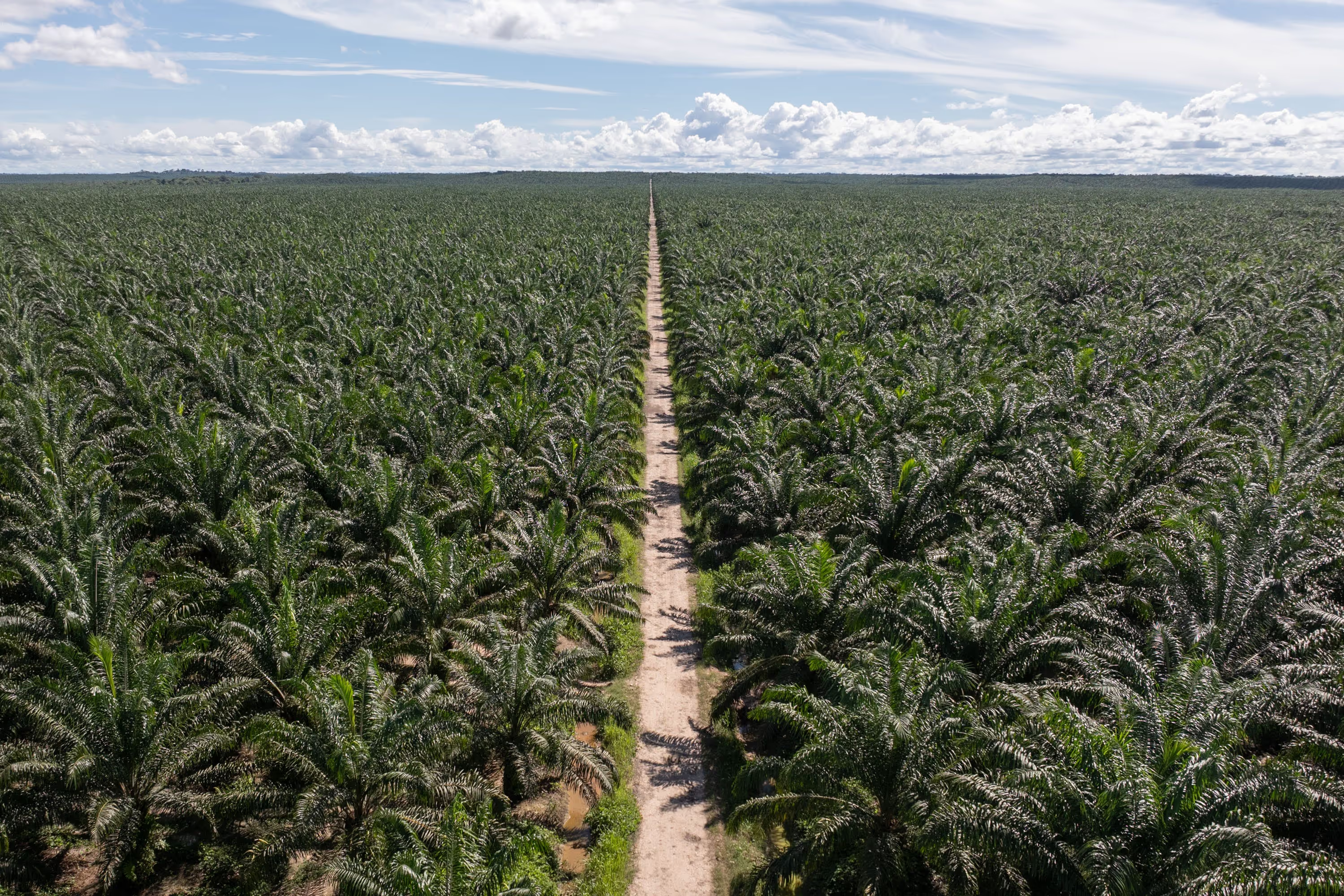
The Tibecocha oil palm plantation stretches across 17,000 acres of what was once rainforest. Tibecocha, the largest plantation in Peru, appears to have been etched into the jungle with a ruler and a straight razor. Its rectangular grid of roads extends over almost 8 miles and contains a million palm trees. Each year, these plantations generate about $50 million in revenue for the Ocho Sur group, whose palm oil has ended up in products ranging from Cheetos to Colgate toothpaste.
"Documentar el avance de la palma aceitera en comunidades indígenas me permitió comprender no solo la devastación inmediata del territorio, sino también sus efectos silenciosos a largo plazo. La transformación acelerada del bosque altera los sistemas de manejo ancestral de la tierra y rompe la relación cotidiana con árboles, animales y ciclos naturales.
En este proceso, son las nuevas generaciones quienes cargan el impacto más profundo: crecer sin el bosque implica perder vínculos esenciales con la biodiversidad, la memoria y las formas de vida que sostienen su identidad."
"Documenting the advance of oil palm plantations in indigenous communities allowed me to understand not only the immediate devastation of the land, but also its silent long-term effects. The accelerated transformation of the forest alters ancestral land management systems and breaks the daily relationship with trees, animals, and natural cycles.
In this process, it is the younger generations who bear the deepest impact: growing up without the forest means losing essential links to biodiversity, heritagememory, and the ways of life that sustain their identity."
Florence Goupil

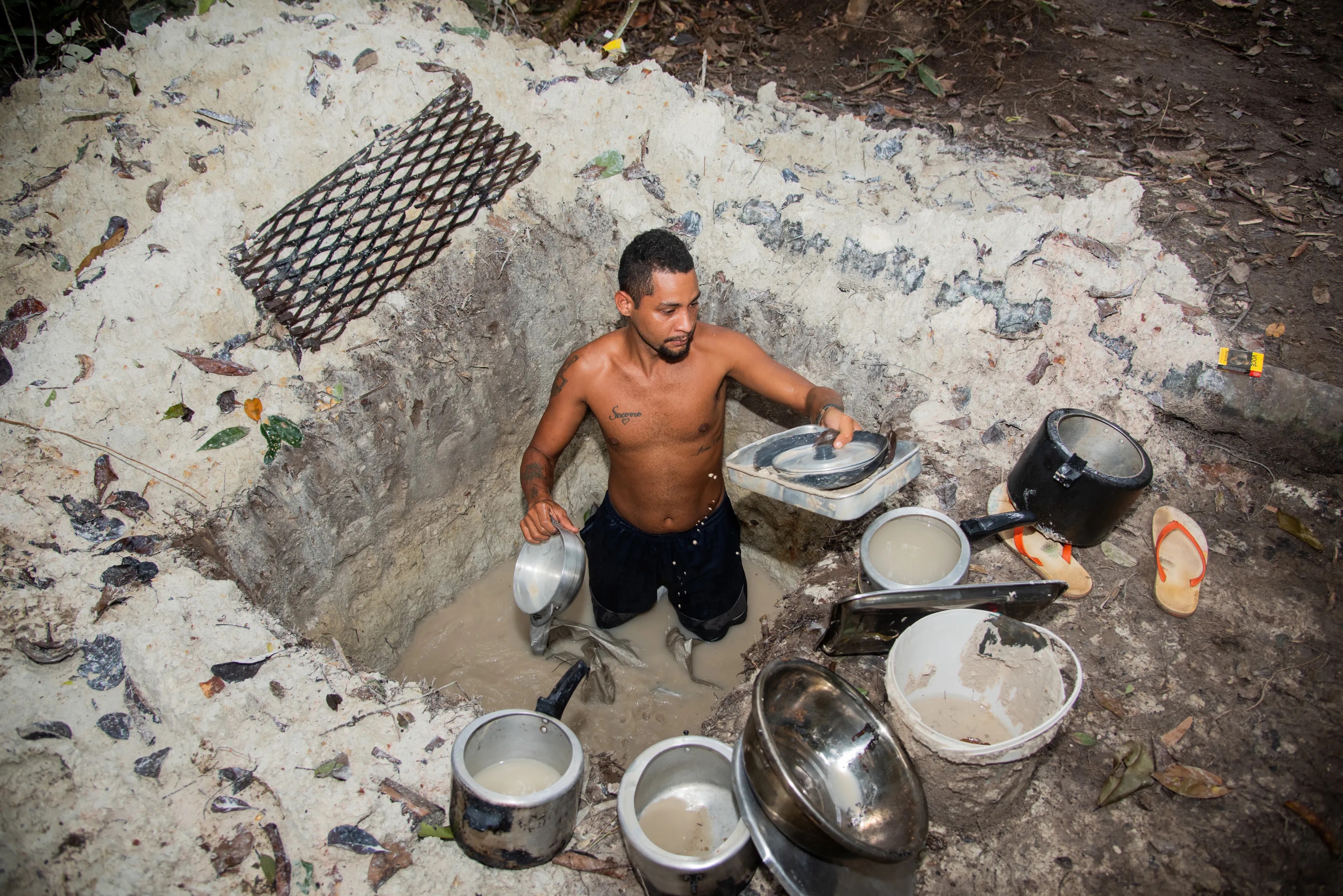
An illegal gold digger in French Guiana tells the police that these are pots and pans for cooking—and not utensils for panning for gold. The officers decided not to burn the material. With gold prices more than doubling in the past 10 years, and with nearly untraceable supply chains spanning the globe, the damage caused by the search for gold in the Amazon increases daily.

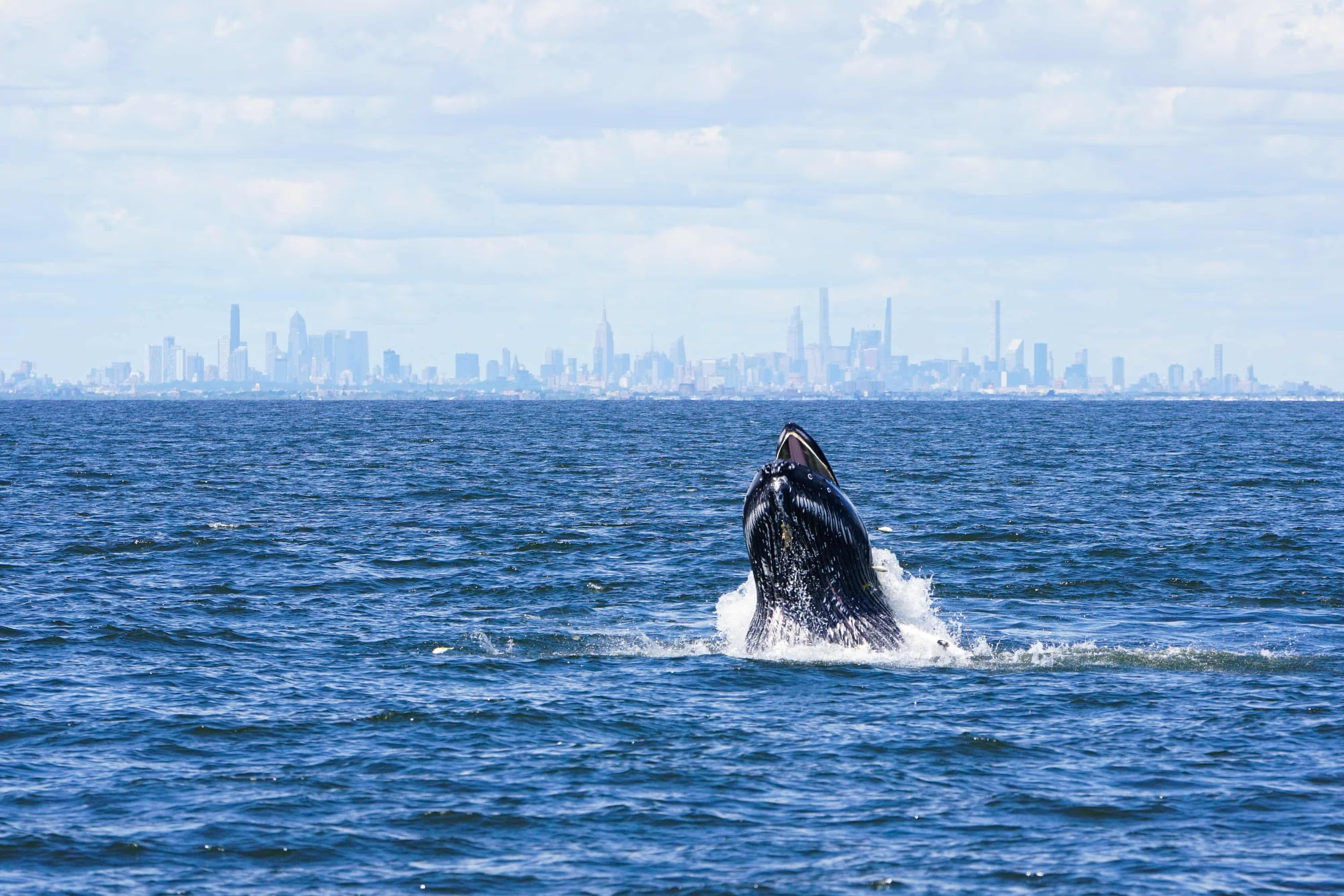
What was once a marine highway connecting southern breeding grounds to northern feeding areas has, since 2010, become a regular foraging destination, putting humpback whales on a collision course with maritime traffic. Cargo vessels, tankers, cruise ships, fishing boats, and recreational craft all cross humpback feeding grounds in the New York Bight—an area roughly the size of Switzerland.

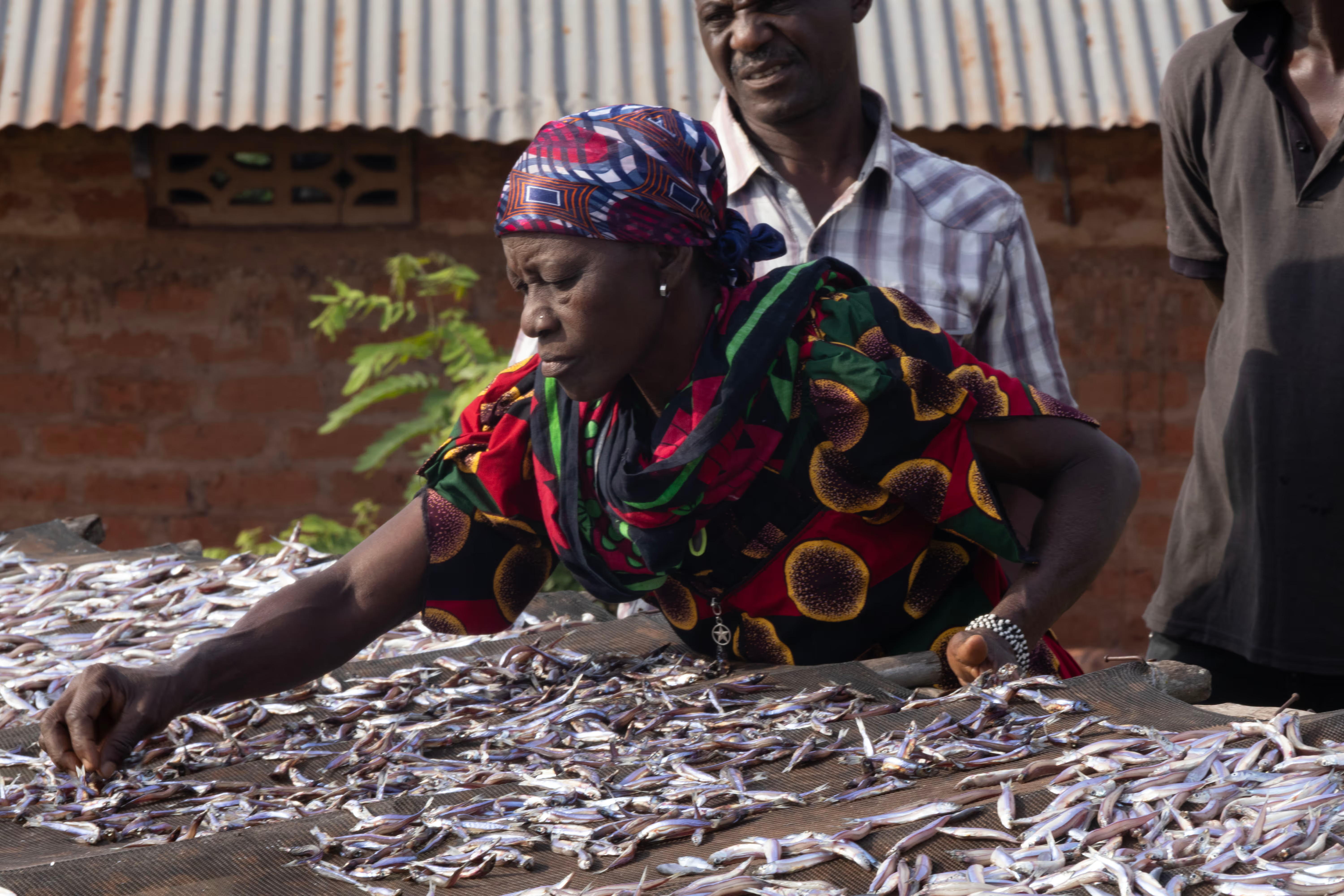
A woman sorts sardines on a drying rack in Katonga, Tanzania. In Lake Tanganyika, an enormous freshwater body in East Africa, men deliver catches while women do most of the processing, yet few have control over fish procurement or sales, leaving their economic security and personal safety at the mercy of others. With climate change and overfishing threatening the longevity of the lake’s fisheries, men can turn to more employment alternatives or simply move elsewhere to fish. However, cultural, financial, and legal hurdles make economic diversification more challenging for women.

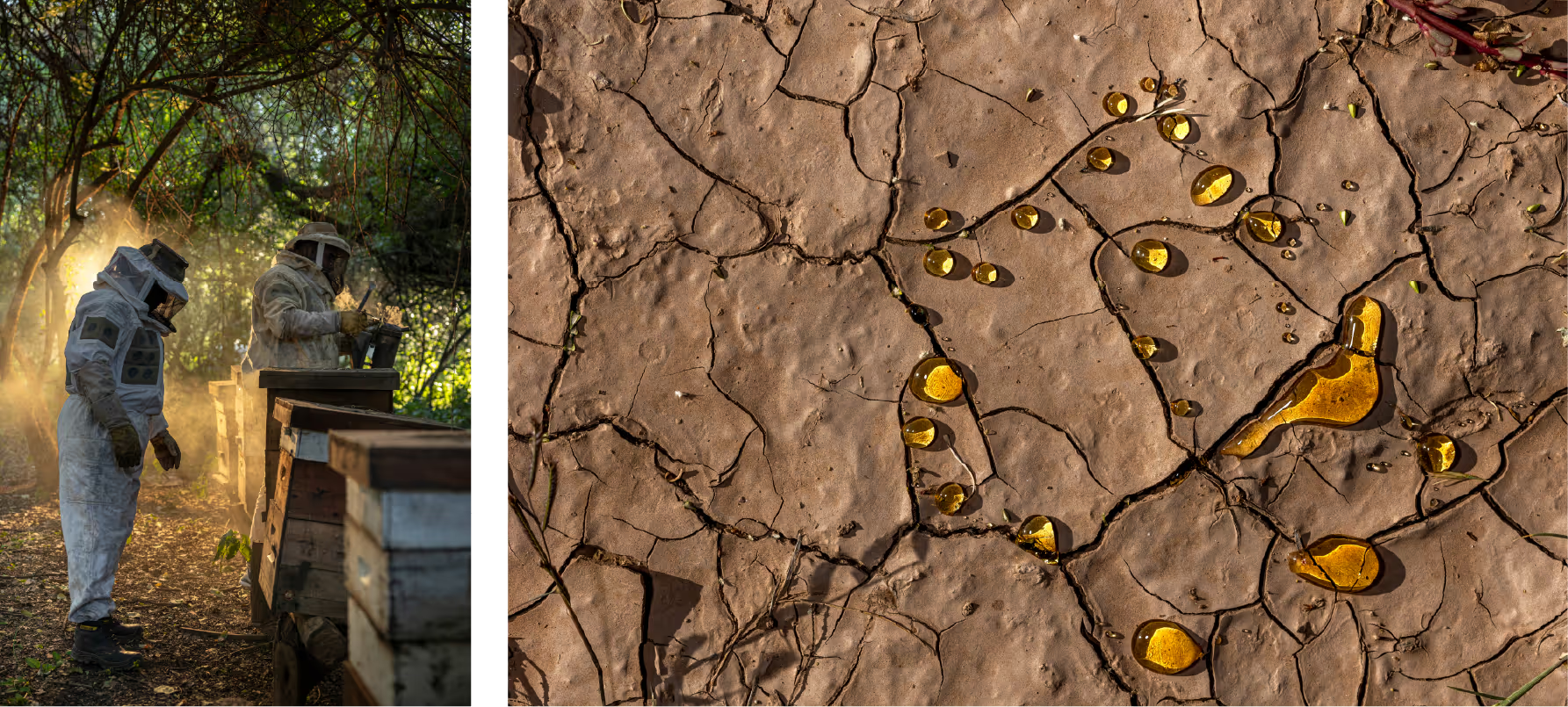
Argentina is the third-largest honey exporter in the world. In the deep Gran Chaco—South America's second-largest forest after the Amazon—many young families of the original Qom and Wichi communities, as well as Creoles, have found in beekeeping and in their native forest a profession that dignifies their lives and takes care of the ecosystem. They have managed to generate a large amount of organic honey, granting them a level of sovereignty that provides social and economic mobility.
"Reporting in the Chaco taught me that through honey we can taste a forest—its trees, soil, and chemistry. Honey production can protect that forest, turning trees into guardians and offering vulnerable communities a horizontal economy. The story also helped bring Chaco honey to wider attention in Argentina, connecting local producers with others across the country and earning recognition from the City Council of Castelli."
Sofía López Mañá

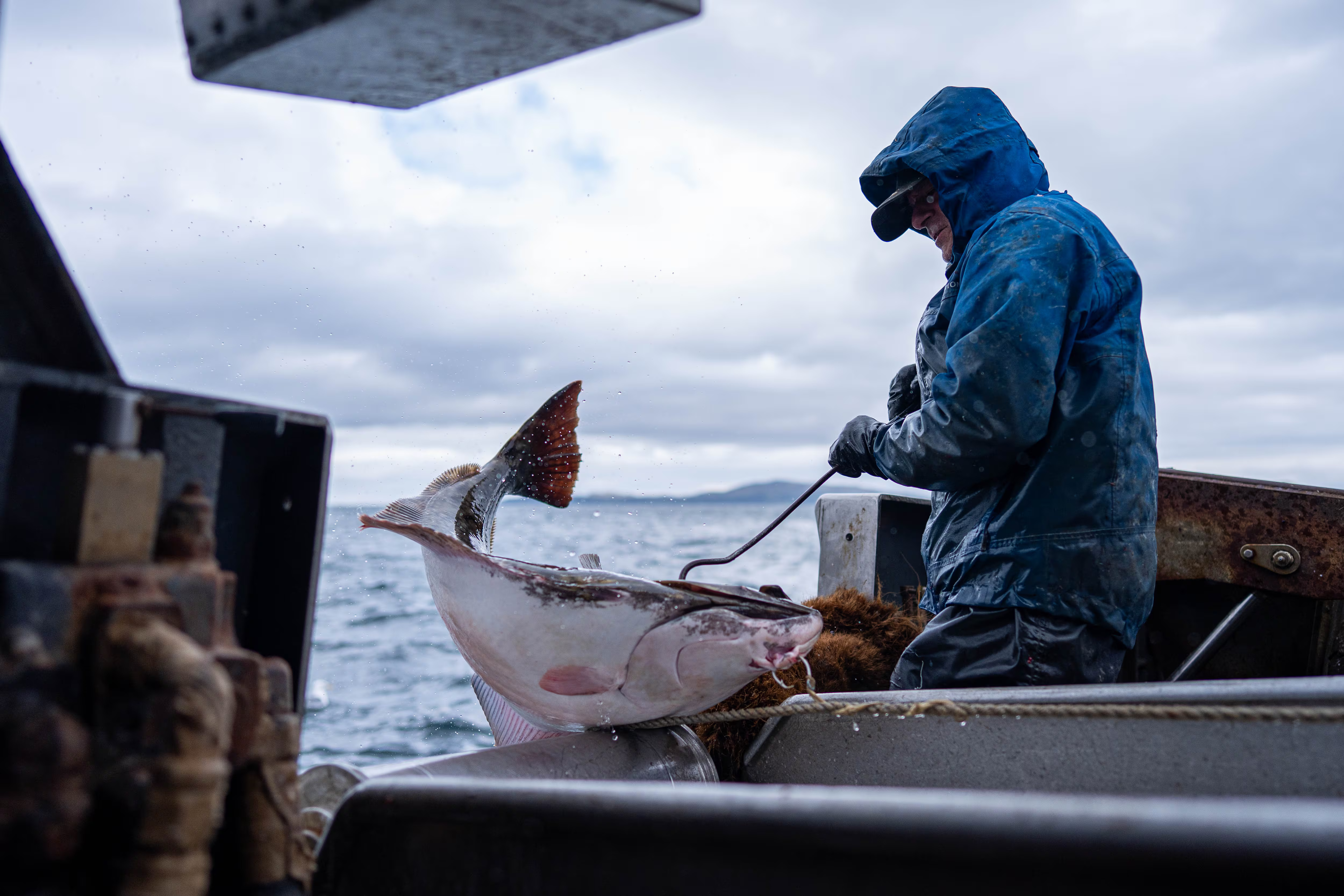
Skipper Robert Hanson uses a gaff to pull aboard a halibut near Unalaska Island, Alaska. Hanson, for more than three decades, has roamed the waters off Alaska to find halibut, long-lived flatfish that can reach lengths of up to 8 feet. During his career, the fishing has become a lot tougher. Hanson’s struggles come as halibut stocks have plunged from record highs of the 1990s across a broad range of the North Pacific. The fishery has long been one of the economic mainstays of small-boat fishermen in Alaska, British Columbia, and the Pacific Northwest.

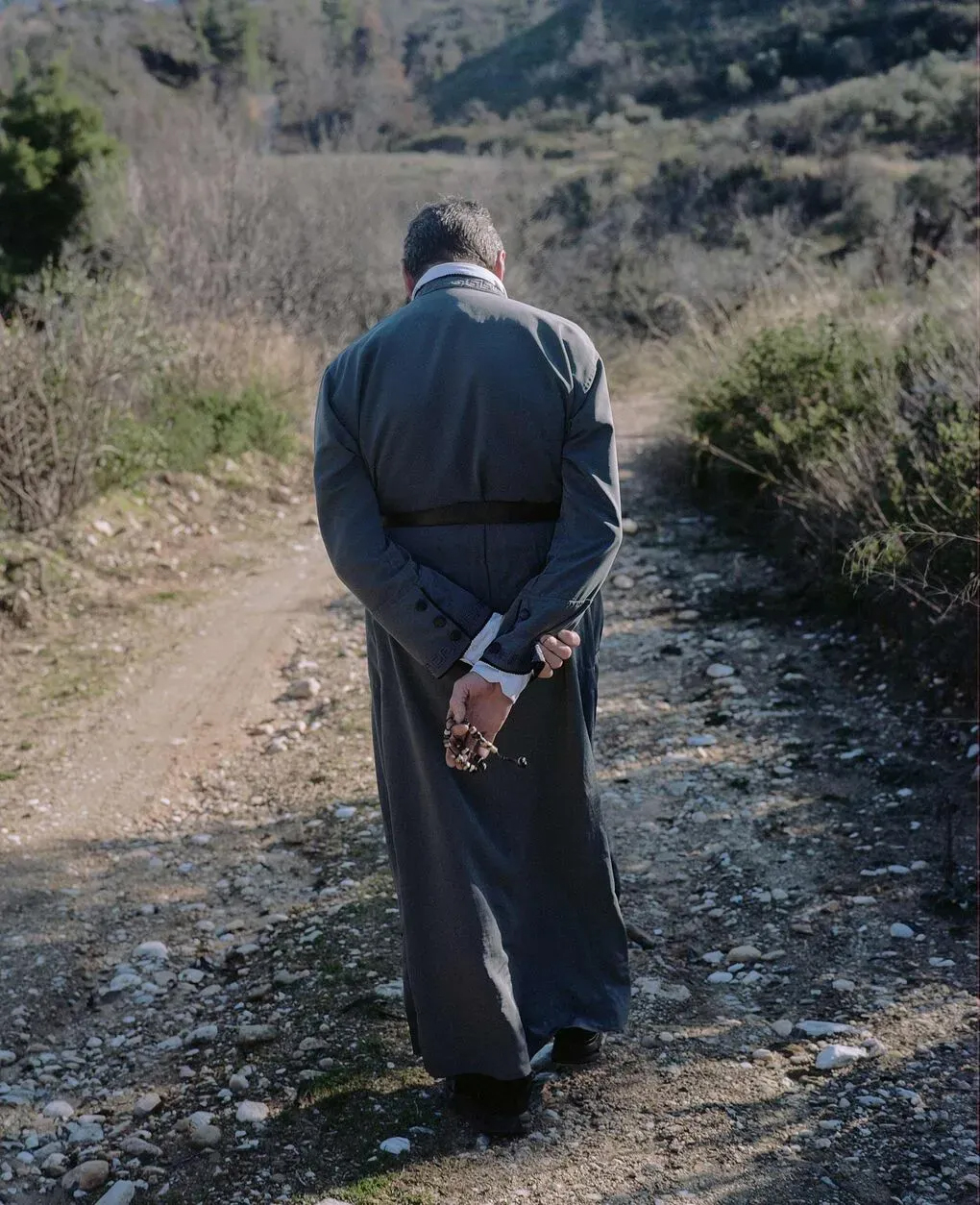
Olives were a low-stress crop for millennia, but climate change has made the harvest much less predictable—and growing regions like Greece more desperate. On the island of Evia, Father Christos, a local olive-growing priest, says a 2021 fire burned about 80% of the olive groves on the island, one of Greece’s largest. The elders in the area who made their life growing olives gave up after the fires. Although you can see the natural regrowth beginning around Evia, Father Christos acknowledges that for many young people, the struggle that awaits in the fields is no longer worth their while.

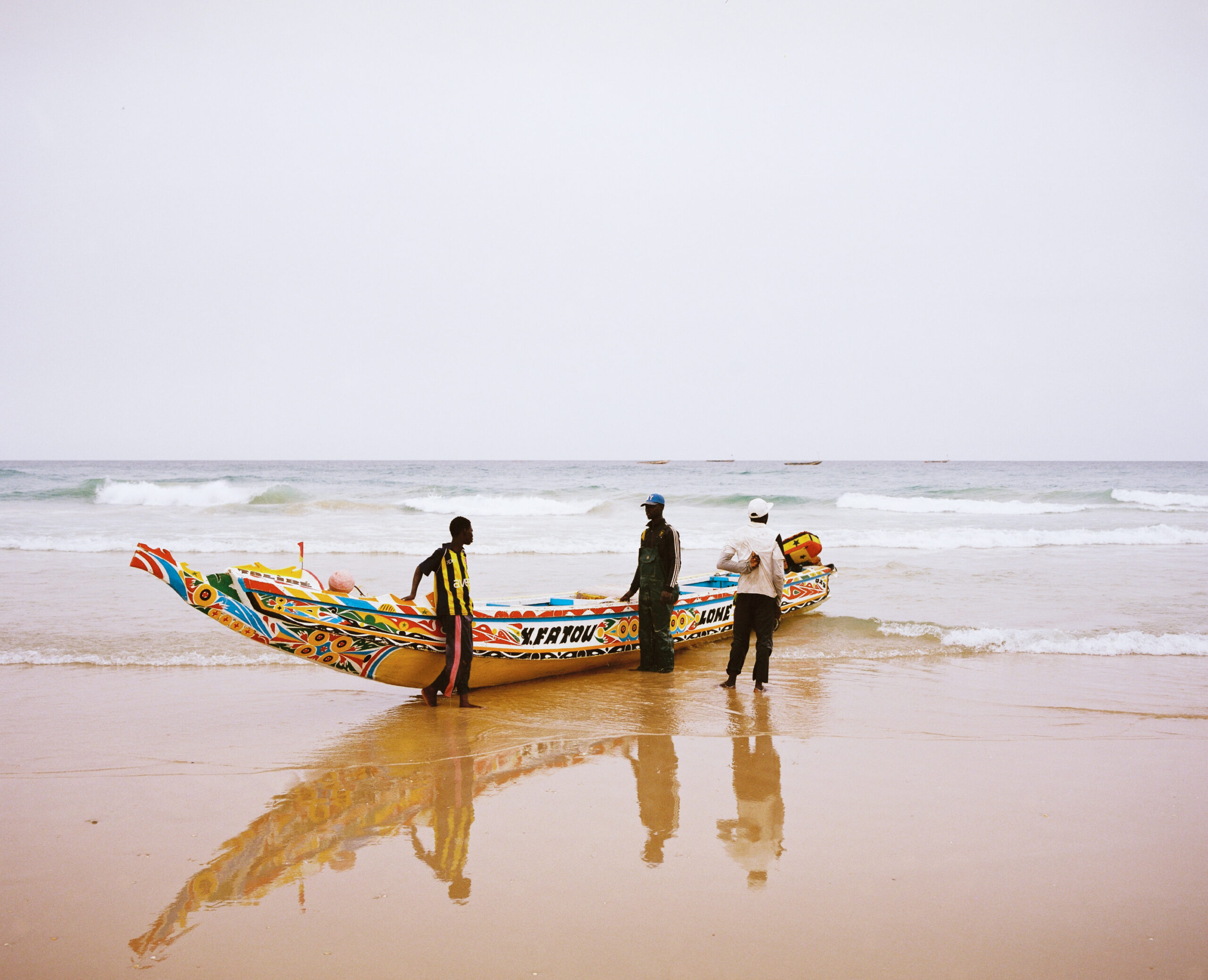
A traditional boat, also known as a pirogue, has returned from fishing at sea in Kayar, Senegal. The fish are unloaded from the boat and then dragged onto the beach. Climate change is hitting the coastline of Senegal hard, including the fishing quarters of Saint-Louis, which were left in ruins after a tsunami in 2018. A government- and World Bank-backed relocation effort has moved residents inland, but local fishermen feel betrayed by the new location and lack of progress on promised infrastructure, while fossil fuel giants build offshore gas drilling platforms near the coast.

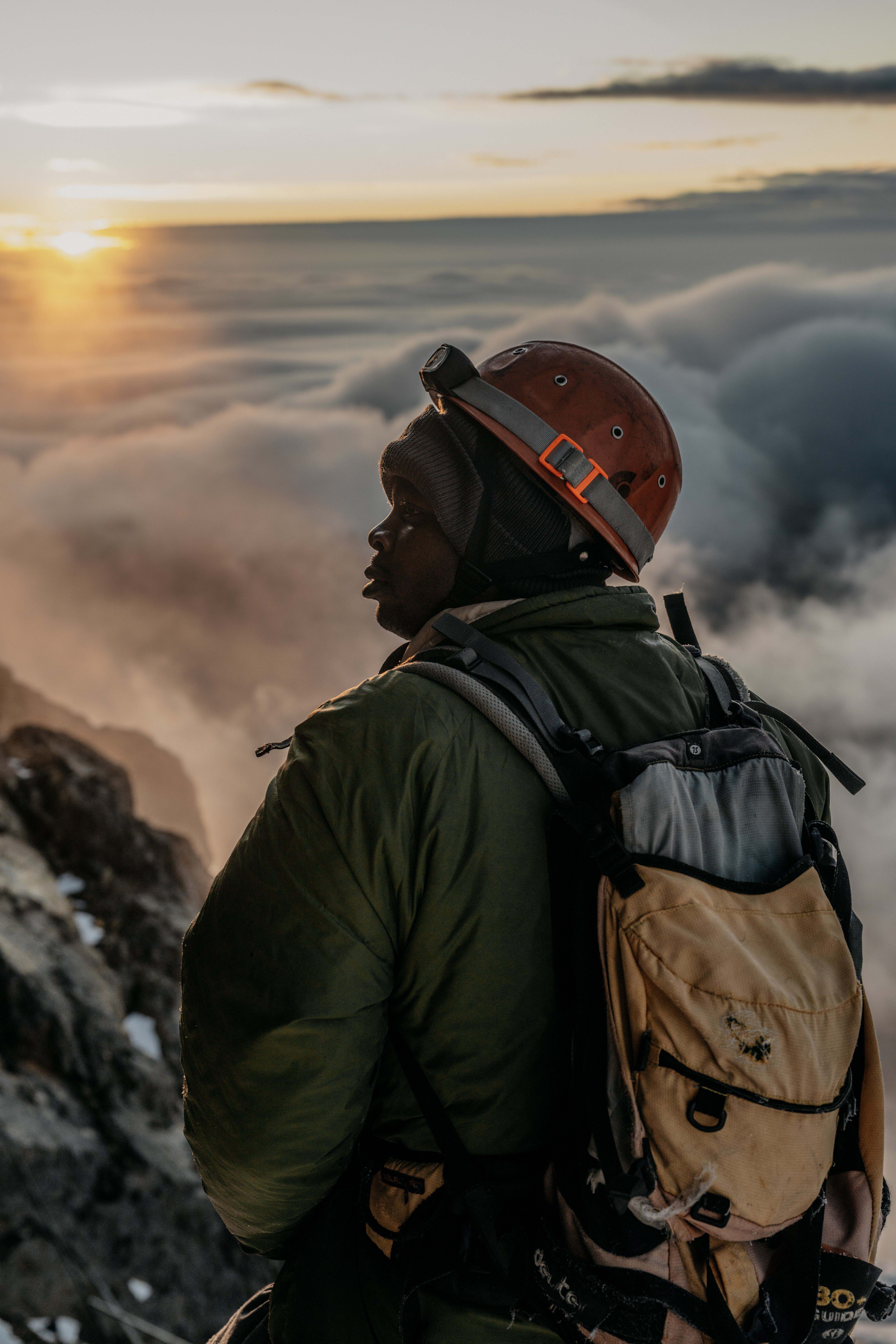
Guide Remigio Thembo watches the sun rise on Mount Stanley, Uganda, the highest peak of the Rwenzori Mountains at 5109 metres of altitude. The water that flows down these mountains is a lifeline for millions. But since 2013, repeated flooding threatens the areas surrounding the mountains, home to one of three remaining glaciers on the African continent.

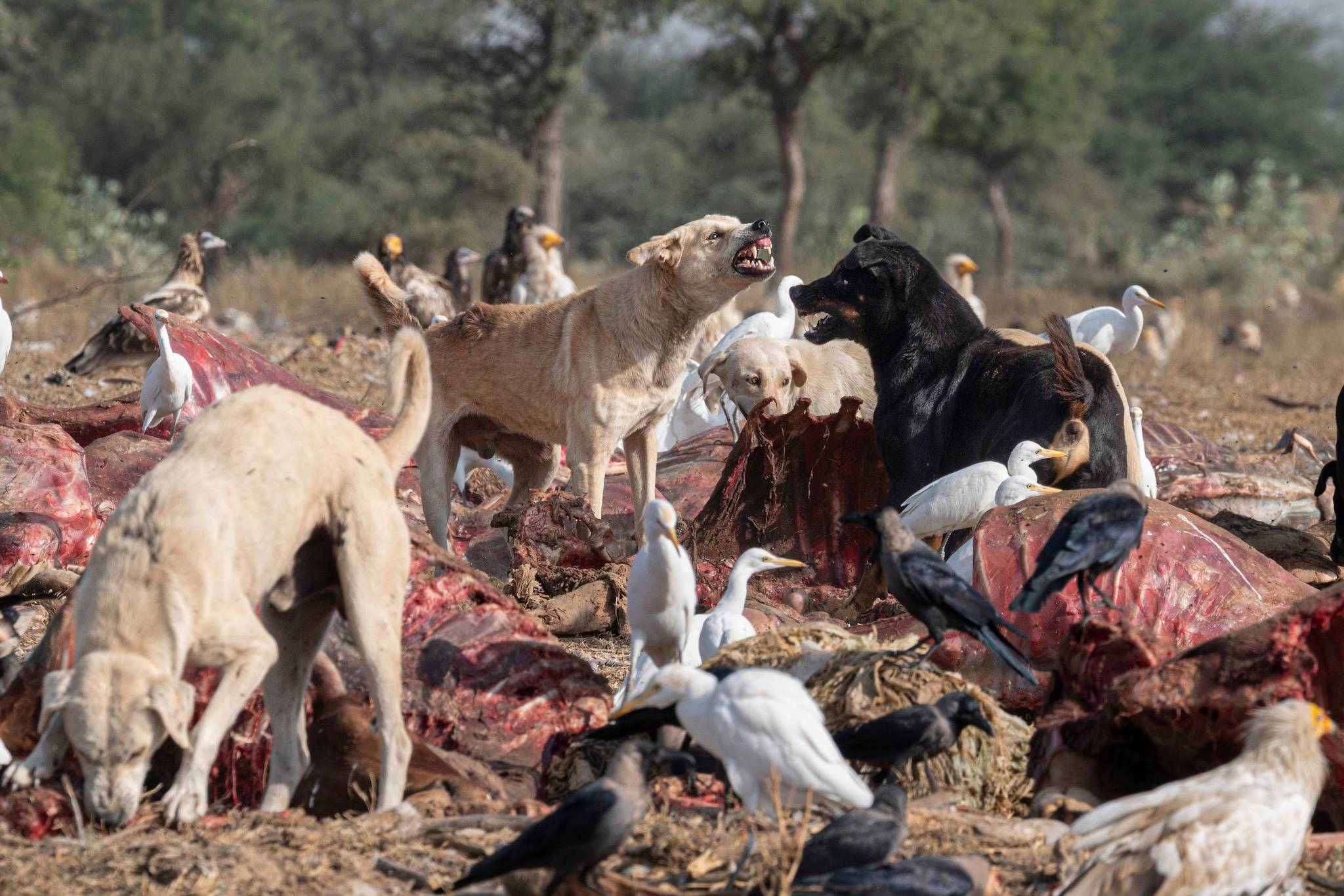
Dogs fight to claim their stake at carcasses, surrounded by vultures and other birds at the Jorbeer dump in northern India. Once thought of as the most common birds of prey, India’s vultures are now nearing extinction. A painkiller for cattle that became common in the 1990s resulted in deadly renal failure for the scavenger birds, whose decline in population led to an increase of cattle carcasses and from there, an increase in wild dogs. The presence of these dogs is causing a rabies infection crisis in the country. The cycle has been difficult to reverse.

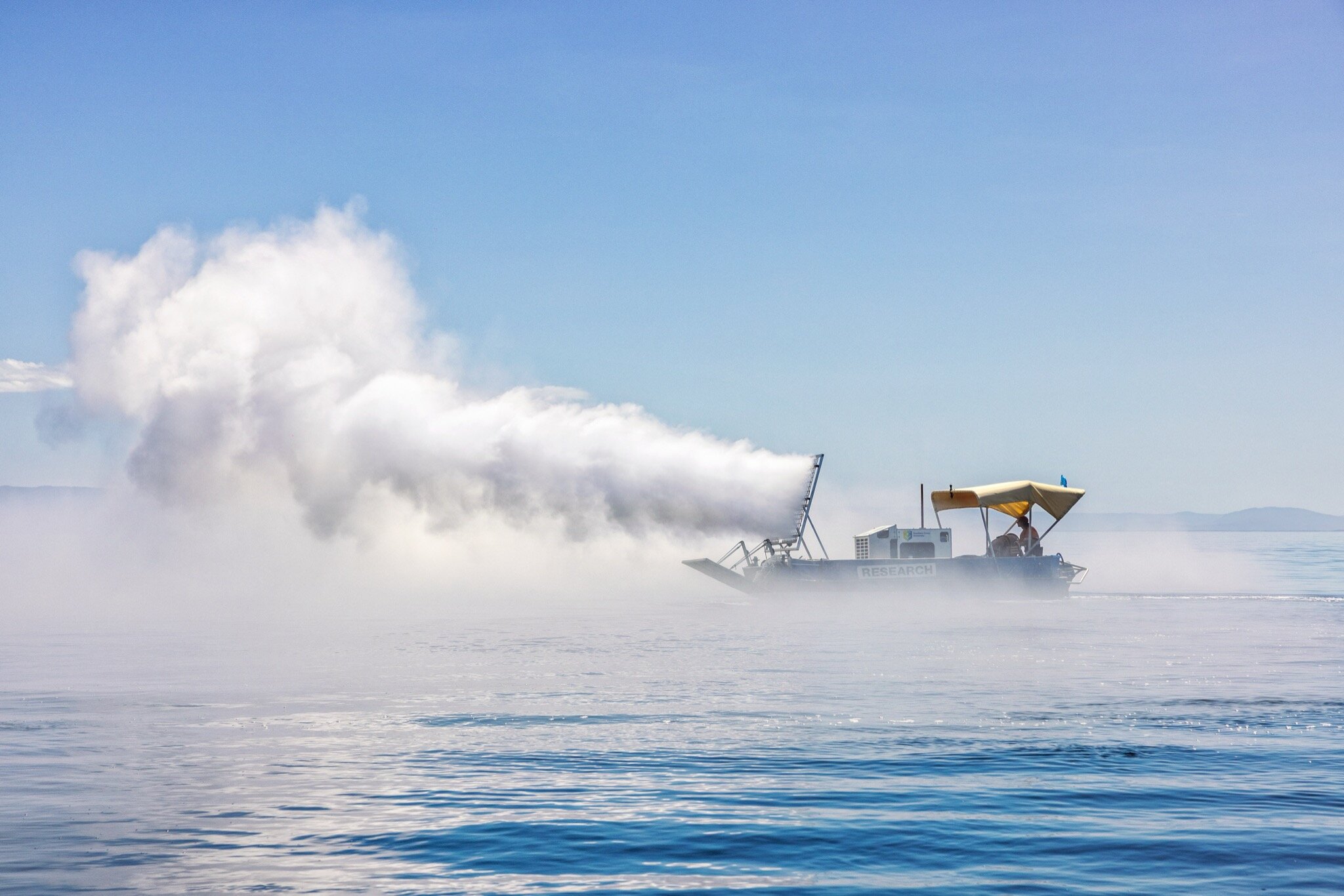
Saltwater mist is being used to create artificial fog in Juno Bay in Palm Islands, Australia. Researchers are testing a localized form of climate engineering—artificial modification of the weather—to protect the Great Barrier Reef from the destructive effects of global warming. As the planet heats up, unusually high ocean temperatures are stressing corals around the world, forcing them to eject their symbiotic partners: the photosynthetic single-celled algae that provide them with much of their sustenance. Theoretically, machine-generated fog can shade and cool the water in which corals live, sparing them much of that stress.

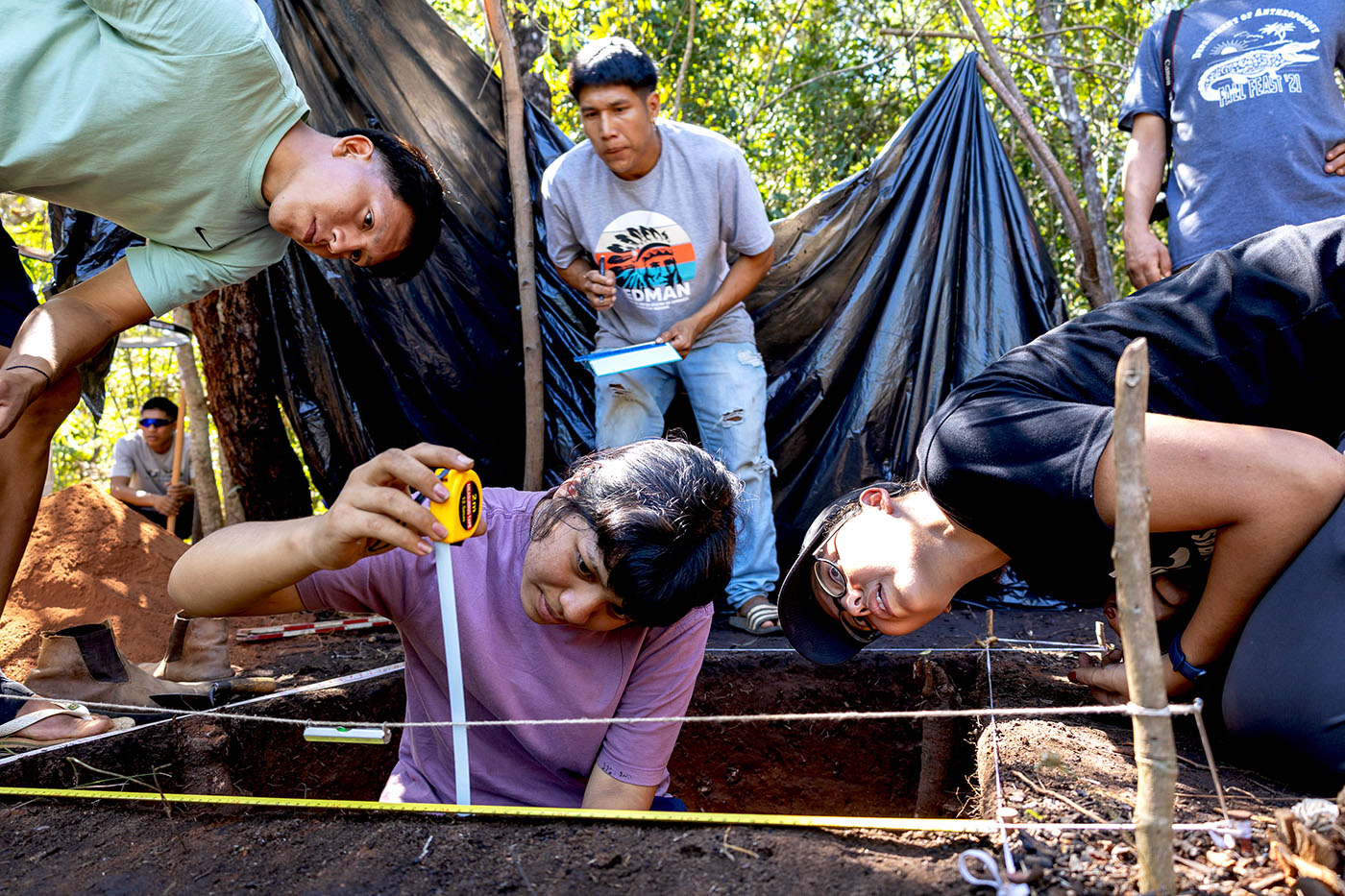
Young Kuikuro villagers receive hands-on archaeological training by excavating an old settlement outside their main village in the Xingu Indigenous Territory, Brazil. The project started in the 1990s in a partnership between archaeologists and the Kuikuro people. Together, they have been exploring the history of Indigenous occupation in the Upper Xingu region of the Amazon, a transition zone between the savanna and the rainforest, and home to many Indigenous groups.
"I spent two weeks living among the Kuikuro in the Indigenous village of Ipatsé with a group of archeologists and other researchers. There, I observed their joint efforts to unearth the past of the Kuikuiro's ancestors. The Kuikuro have established a unique partnership with archaeologists over the last 30 years, working with them to study the early human occupation of the Amazon. Together, they have identified more than 20 ancient cities in the forest, showing that Indigenous peoples have lived in vast, complex, sustainable societies for millennia.
I saw Kuikuro people participating in hands-on excavation training, like digging pits in the forest, in places that had been their great-grandparents' houses, or even farther back, to their ancestors thousands of years ago. It was touching to see how important it is for them to unearth this past to keep their culture and history alive, and how they use archaeology as a political tool to strengthen their case for land rights and to have their millennial presence in that territory recognized by the 'whitemen.'"
Sofia Moutinho

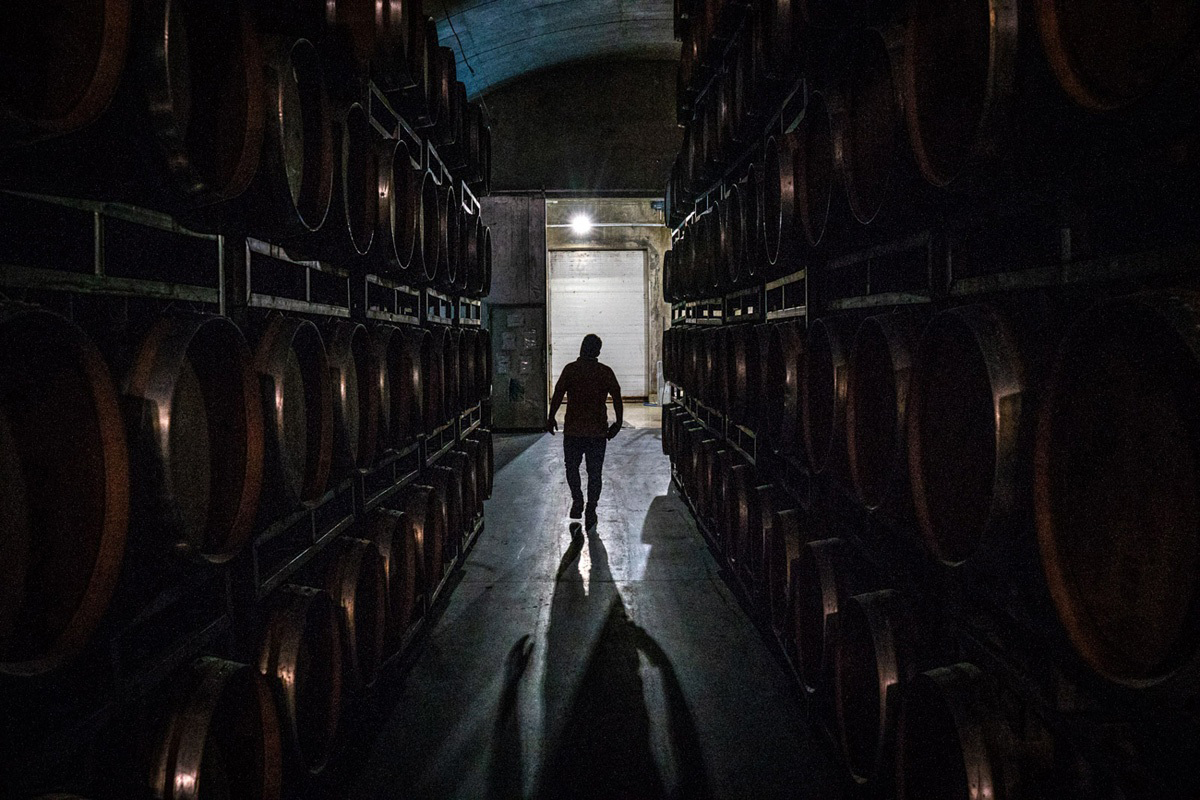
Historic oenologist Mauricio Squartini walks through the interior of Salentein winery in Argentina. Climate change poses a dire threat to global wine production. In 25 years, more than half of the wines in the world could disappear. But in Mendoza, Argentina's top wine-producing region, winemakers are adopting diverse strategies to combat climate impacts.

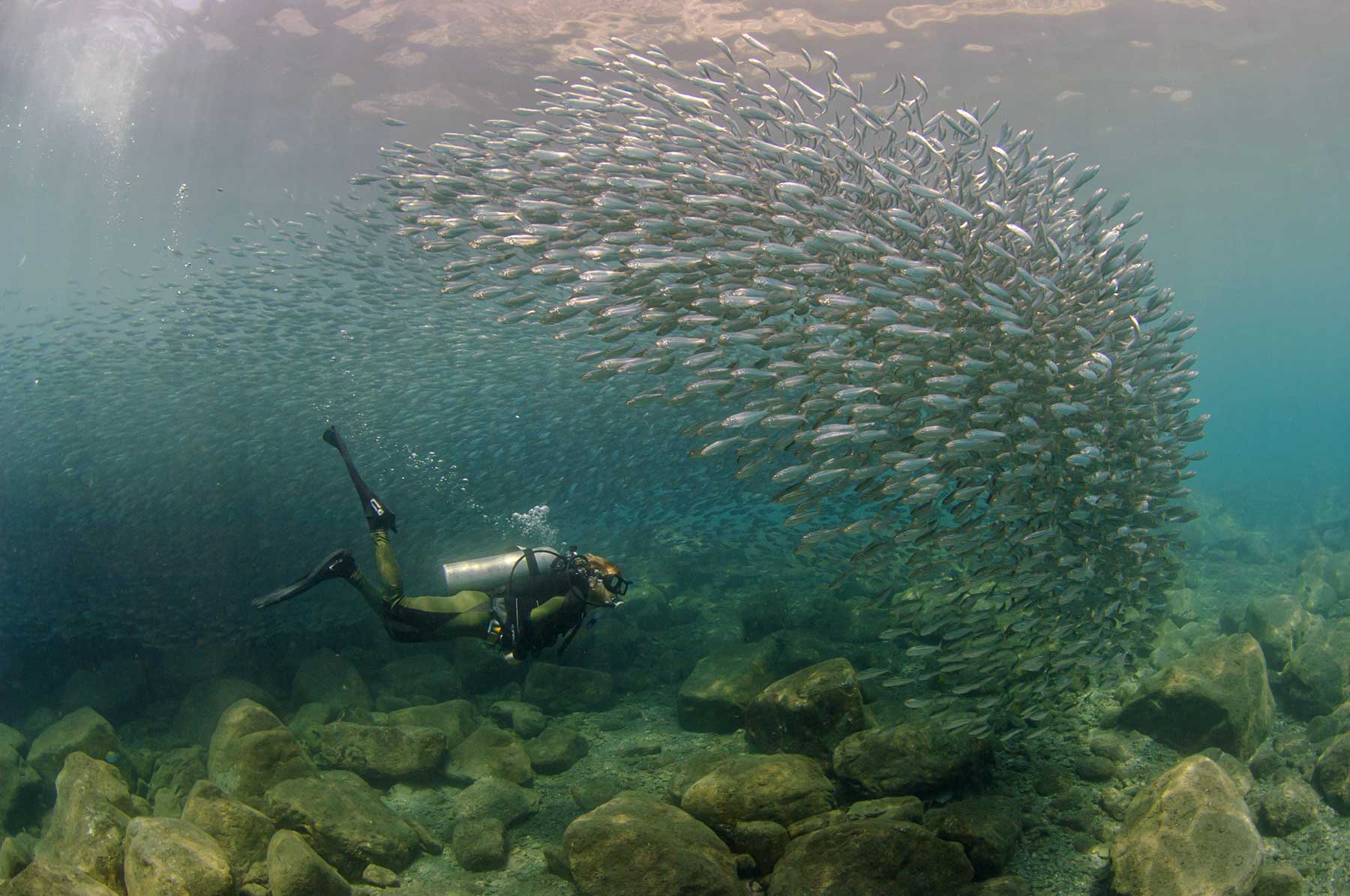
A diver surrounded by a school of jacks in Cabo Pulmo, Mexico. The image captures the remarkable recovery of marine life and has become a global symbol of community-led conservation. What makes Cabo Pulmo unique is not only its biodiversity, but also the web of diversities that sustain it—biological, cultural, social, and economic. From this experience, scientists have learned that protecting an ecosystem is not enough: The lives that depend on it must also be safeguarded.

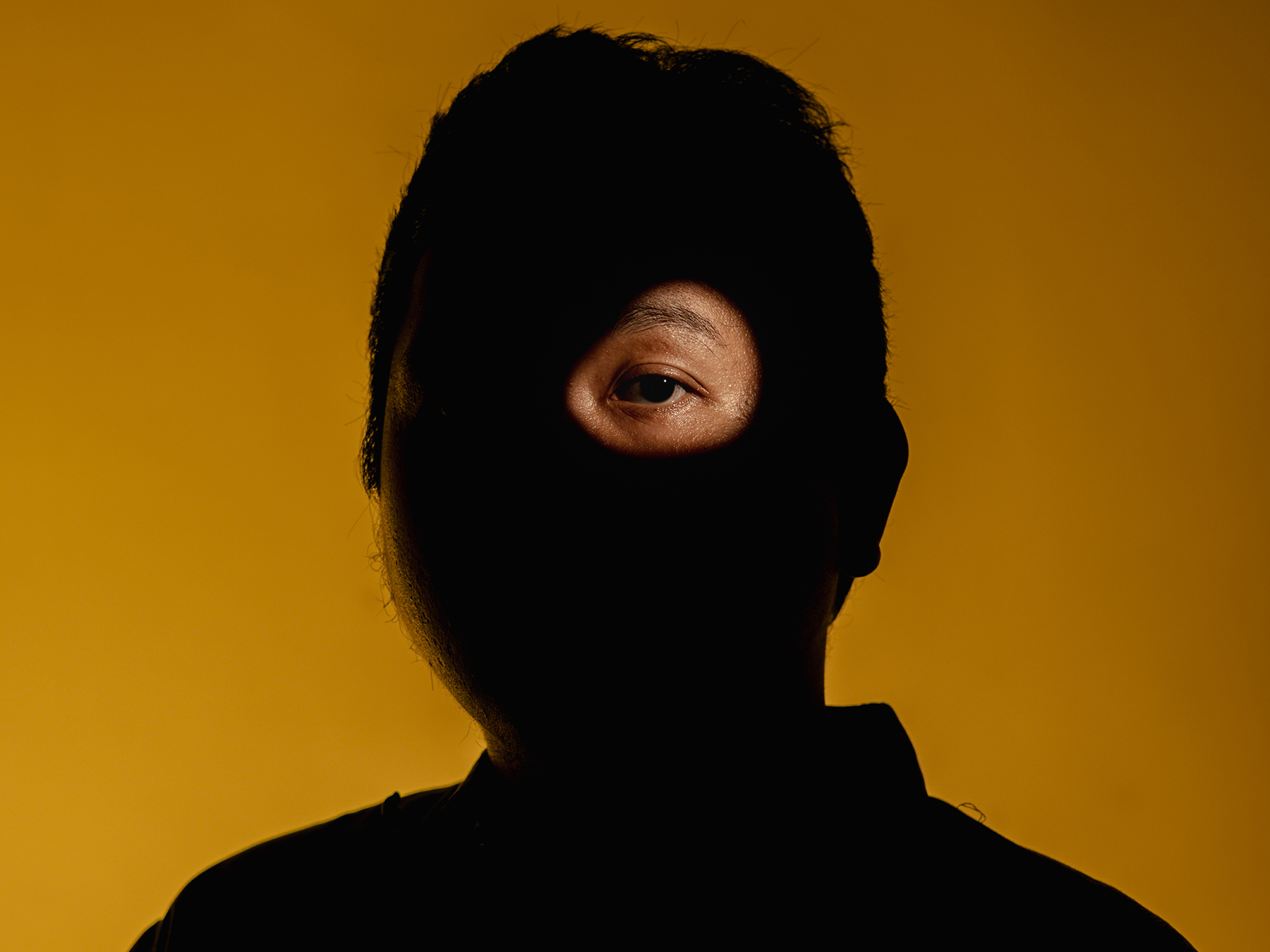
Dana, a 30-year-old teacher at an international school in Indonesia, says he has lost “the soul of teaching” after turning to ChatGPT for lesson plans. Ironically, in class, Dana urged his students not to take shortcuts by AI for their homework. He noticed that while his students are able to read, they struggle to draw insights from text. To counter this, he teaches them how to locate sources on their own and works to build their critical-reading skills. These experiences highlight how workers are losing the space to exercise their own agency—the freedom to define their own goals, passions, and sense of meaning through work. “We try to design lessons that would cultivate a sense of curiosity, but the curiosity itself feels artificial,” Dana added.

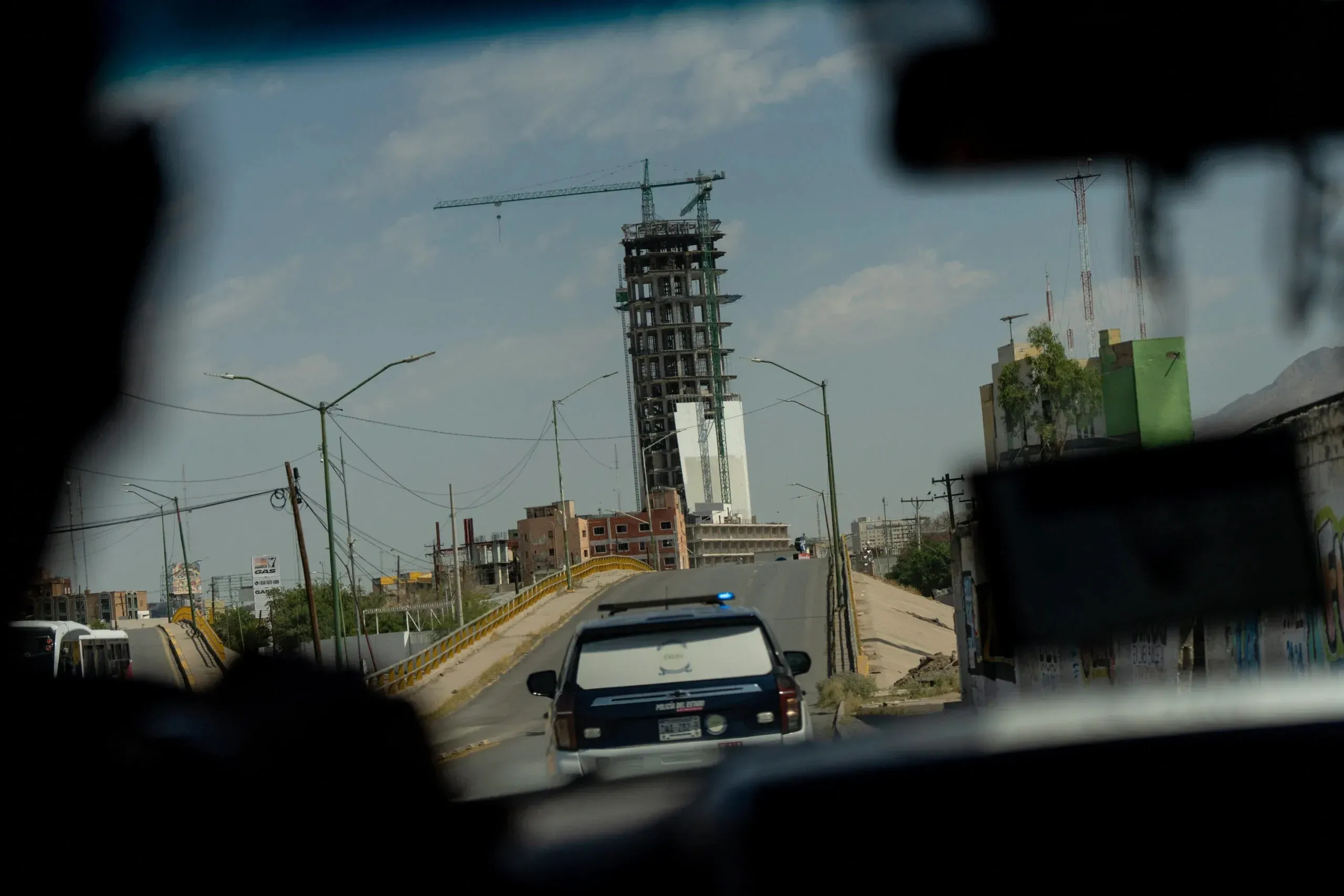
A 20-story building, still under construction, rises in downtown Ciudad Juárez, in the Mexican state of Chihuahua. Once complete, this looming tower, known as Torre Centinela (the Sentinel Tower), will support a massive state surveillance AI-powered system along the Texas-Mexico border. Chihuahua’s authorities describe the Centinela system as a guarantor of border security, but critics warn that it is cause for civil liberties concerns on both sides of the U.S.-Mexico border.

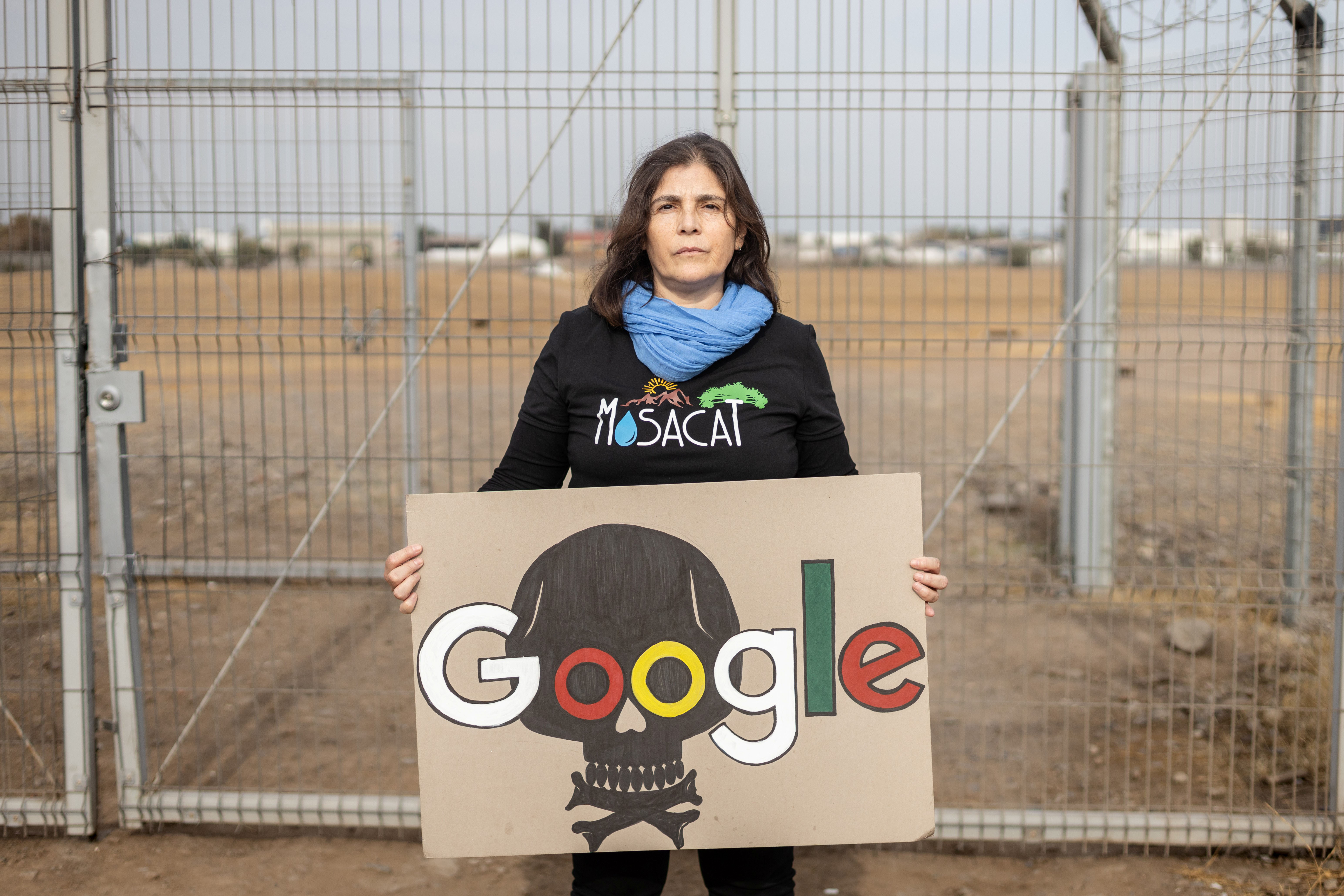
Tania Rodríguez, one of the spokespeople for the Mosacat collective, is shown in front of the lot owned by Google in the municipality of Cerrillos, Santiago, Chile. The computer towers inside are just one piece of a vast global network—a web of buildings larger than football fields that Microsoft and other internet giants, such as Amazon and Google, are spreading across the planet. And with a common goal: to satisfy the enormous computing demands that their artificial intelligence models—the largest and also the least eco-friendly—require to function.
"This project brings us closer to a reality that is not new in Latin America, where multinational giants come to extract resources, which only harm the community, without leaving any benefits. It is the eternal struggle against Goliath by small communities organized in the fight for the environment and their territory. Getting to know these people brings us closer to understanding how, once again, their resources, their land, and their lives are being exploited by foreigners."
Sofia Yanjari

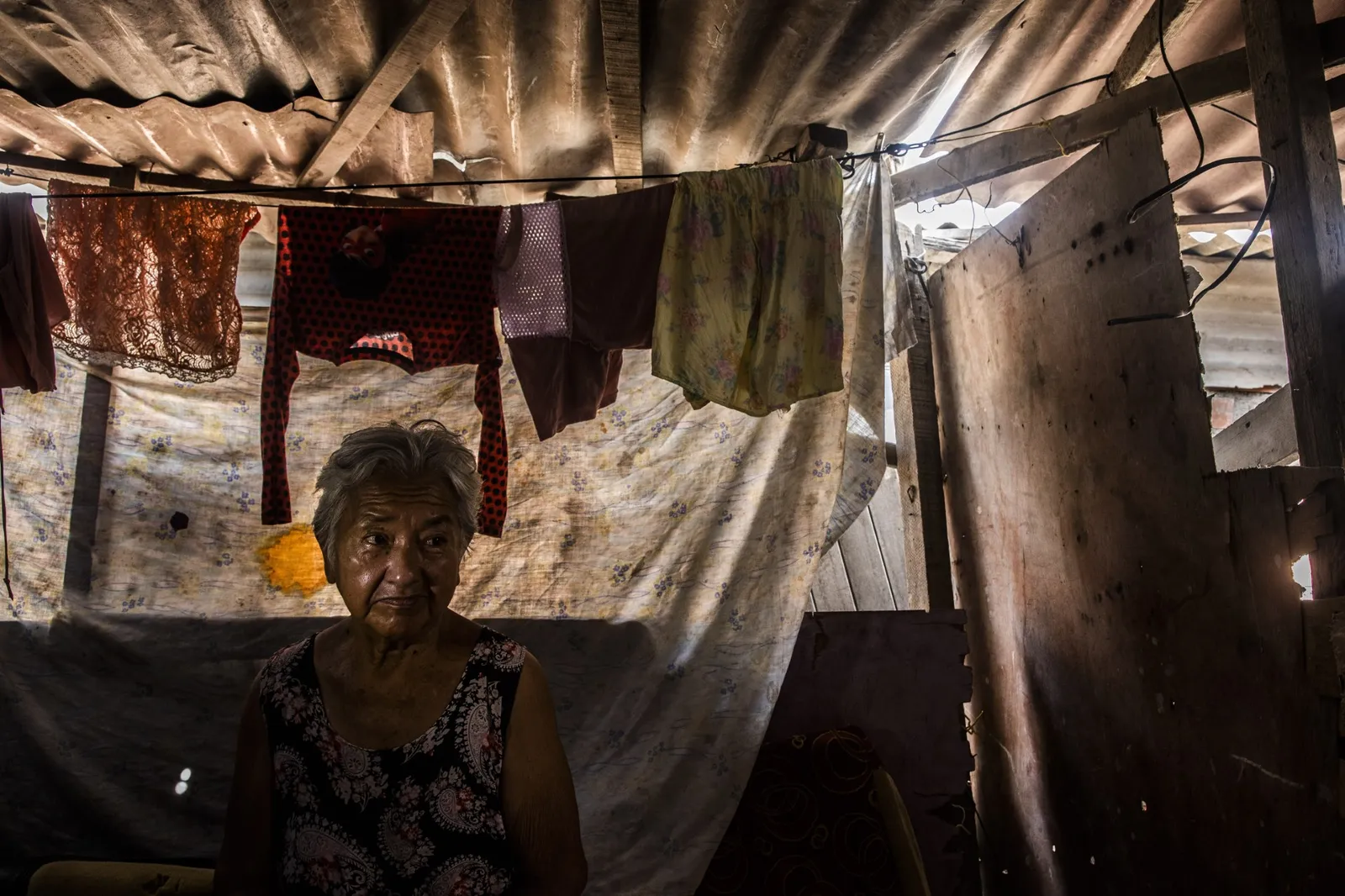
Mirtha Bautista, 79, lives in a house made of cardboard and corrugated iron. She does not receive a pension because Peru's poverty-targeting algorithm says she is not extremely poor. But many nights she goes to bed without dinner. Peru’s Ministry of Development and Social Inclusion implemented a system that determines the socioeconomic classification of households, a key requirement for accessing welfare programs. Despite its goal to assist the most vulnerable, the system's flaws led to significant exclusion errors, leaving thousands of elderly people in need without support, like Bautista.

A demonstration on International Day for the Elimination of Violence against Women in Buenos Aires. Under Argentine President Javier Milei, women’s healthcare has faced cuts: The administration has ushered a wave of layoffs in the health ministry, slashed funding for misoprostol and mifepristone, scaled back spending on contraceptives, struck its support for sex education programming, eliminated the Ministry of Women, Genders and Diversity, and made other symbolic moves. The government’s spending cuts have left provinces scrambling to fill the gap.

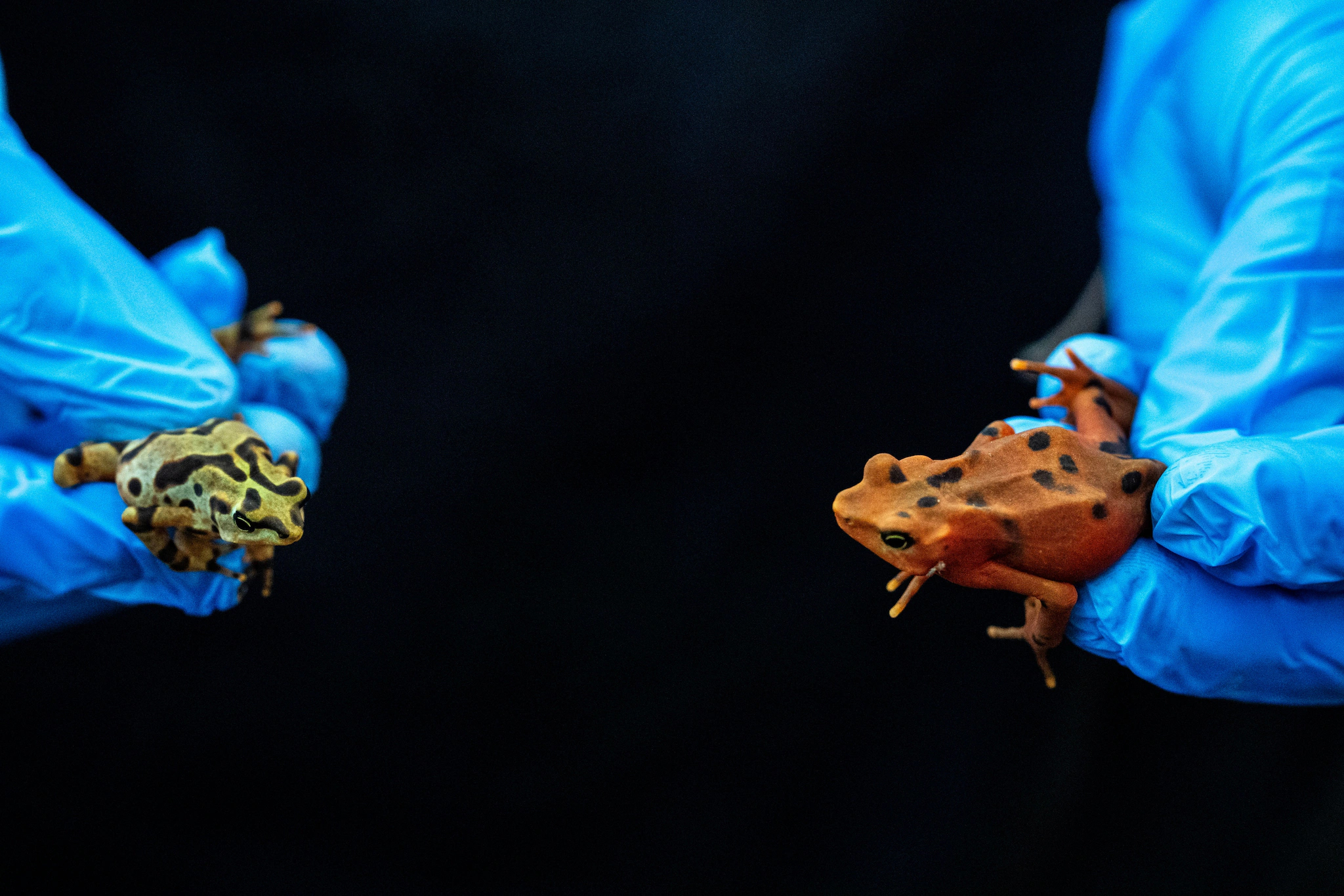
Two variable harlequin frogs are shown at the Panama Amphibian Rescue and Conservation Project in Gamboa. As dozens of frog species have declined across Central America, scientists have witnessed a remarkable chain of events: With fewer tadpoles to eat mosquito larvae, rates of mosquito-borne malaria in the region have climbed, resulting in a fivefold increase in cases.

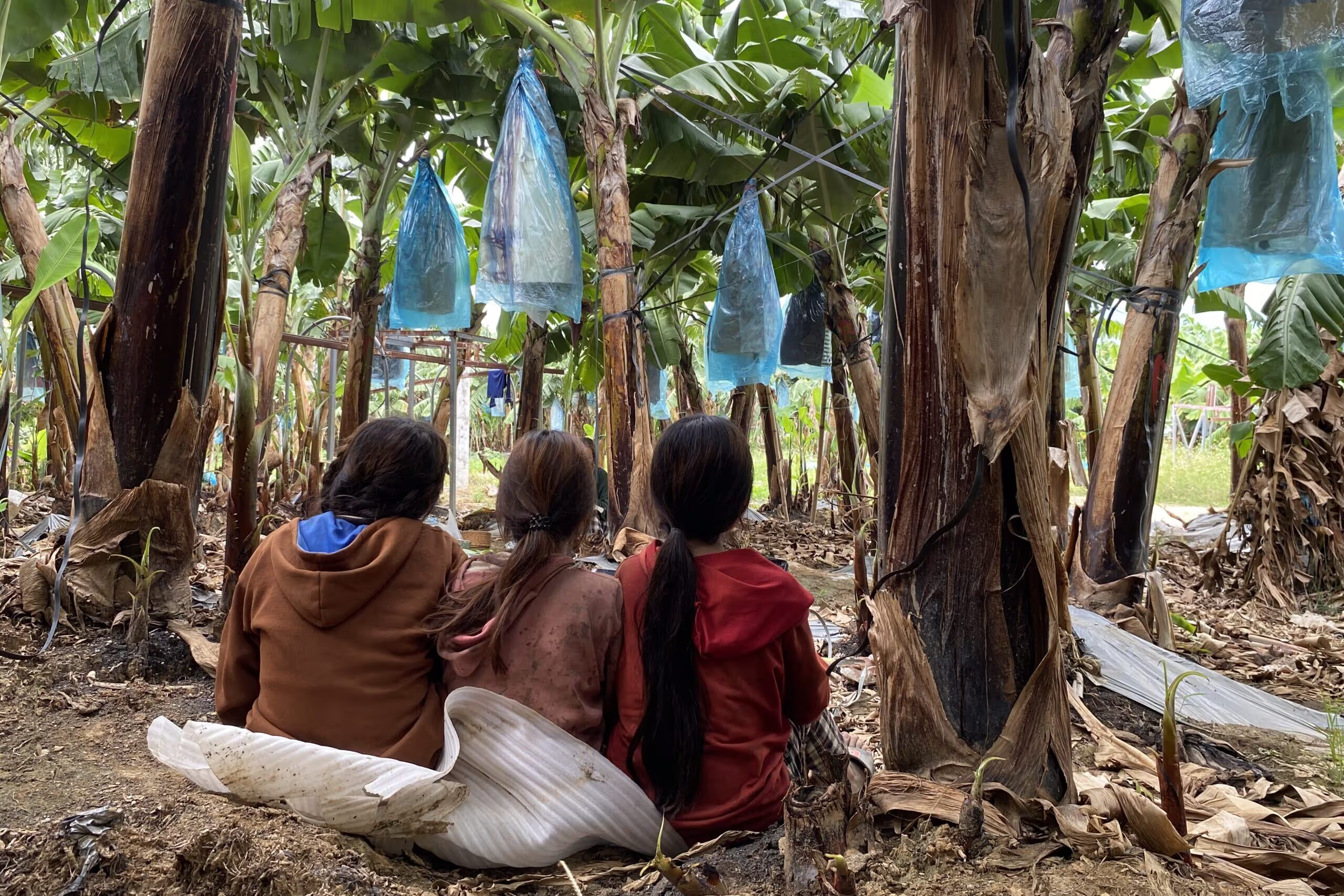
Young Hmong workers rest after long hours of labor on a banana plantation in Oudomxay province, northern Laos. Many, including children under 15, face direct exposure to hazardous agricultural chemicals used on the plantations.
"I met these young Hmong girls at a Chinese-operated banana plantation in Oudomxay, northern Laos, during their brief midday break. Some are under fifteen, and all left school too early, laboring daily in hazardous conditions for barely enough wages to survive.
Their stories exemplify the bittersweet reality of foreign capital flowing into Southeast Asia’s least developed country: while it can create pathways out of poverty, it also imposes risks on those with the least power. They also reveal how the burdens of a supply chain are unevenly distributed; the stability and affordability of goods in wealthier markets often come at the expense of the health and futures of vulnerable communities far away, exposing the deep inequalities entrenched in global trade."
Anonymous, Mekong Eye

Jennifer Mankae is shown with her son Kananelo, who survived a severe group B streptococcus (GBS) infection after his birth in 2023. GBS is a leading cause of disease and death in infants up to 3 months old. Worldwide, it sickens about 400,000 babies a year and kills at least 91,000, more than half of them in Africa. But 50 years ago, Carol Baker, an American doctor, proposed vaccinating pregnant women to save babies from a deadly microbe. She was roundly dismissed then, but now, the idea is nearing fruition and a maternal vaccine could avert much of this toll.
.jpg)
For decades, aqueous film-forming foam was used in training sites for firefighters. This toxic blend of foams was later banned, but some of those pockets of chemical contamination could be endangering household wells while others threaten drinking water at fire stations. As firefighters have grown more aware of PFAS and the many chemical hazards they face, they’ve begun adopting practices on and off the job to reduce health threats.

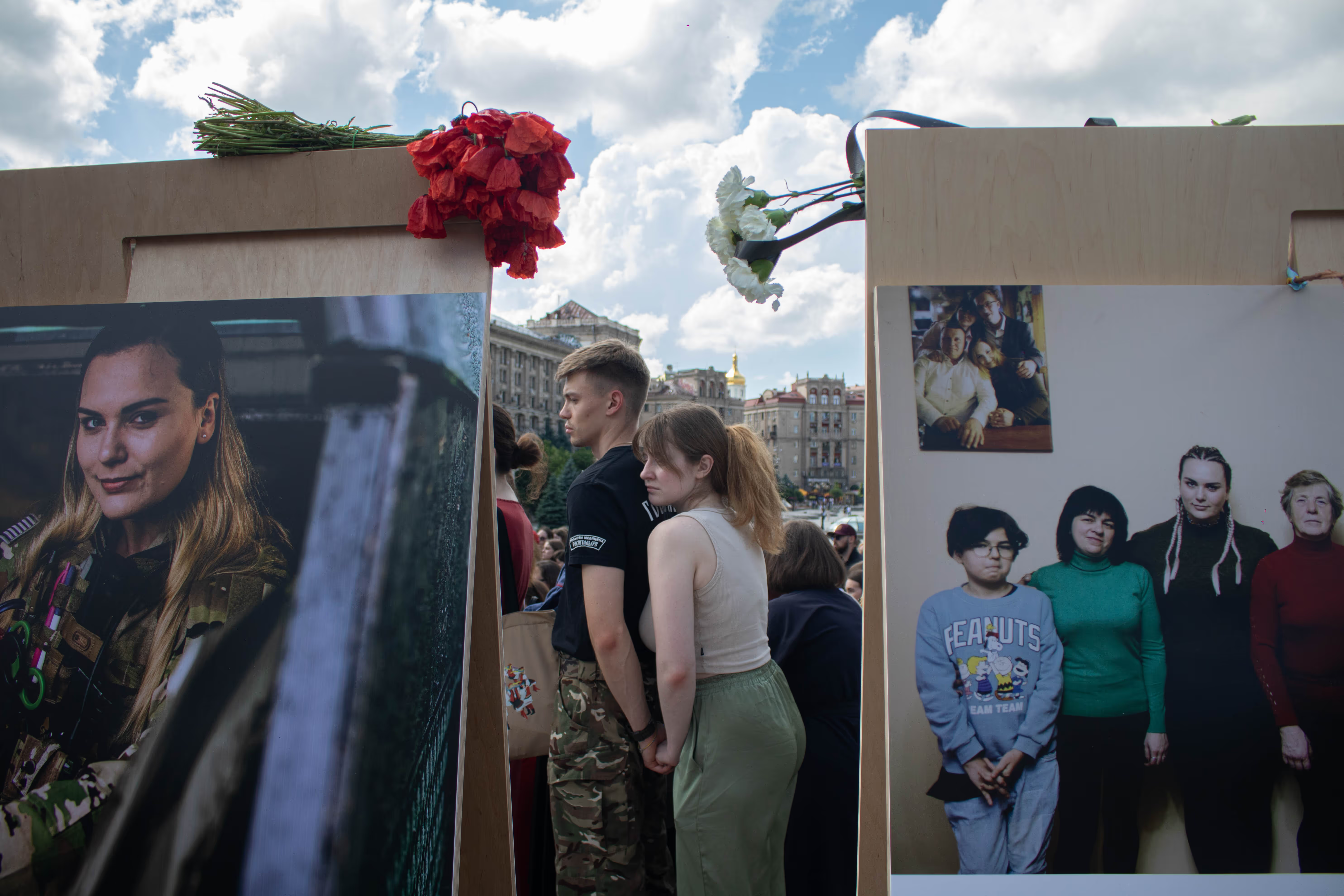
A farewell ceremony honored combat medic Iryna Tsybukh last June. Since the U.S. election, Anna says, she is “truly scared for the existence of Ukraine. [Donald] Trump despises Ukraine and devalues all of [its citizens’] lives.”
.jpg)
The nonviolent resistance movement in the West Bank, which has limped along for the last two decades in an atmosphere of increasing repression, is for the moment in full retreat. In the tumult, it has been easy to miss the general absence of the kind of nonviolent protest that has characterized Palestinian resistance movements in the West Bank since the end of the Second Intifada. From left to right: A poster for a martyr in the rubble in the Jenin refugee camp on March 10, 2025; a memorial for Shireen Abu Akleh in the Jenin refugee camp, before it was destroyed, on August 5, 2022; road signs in Hebrew, erected by the IDF, in the Jenin refugee camp on March 10, 2025.

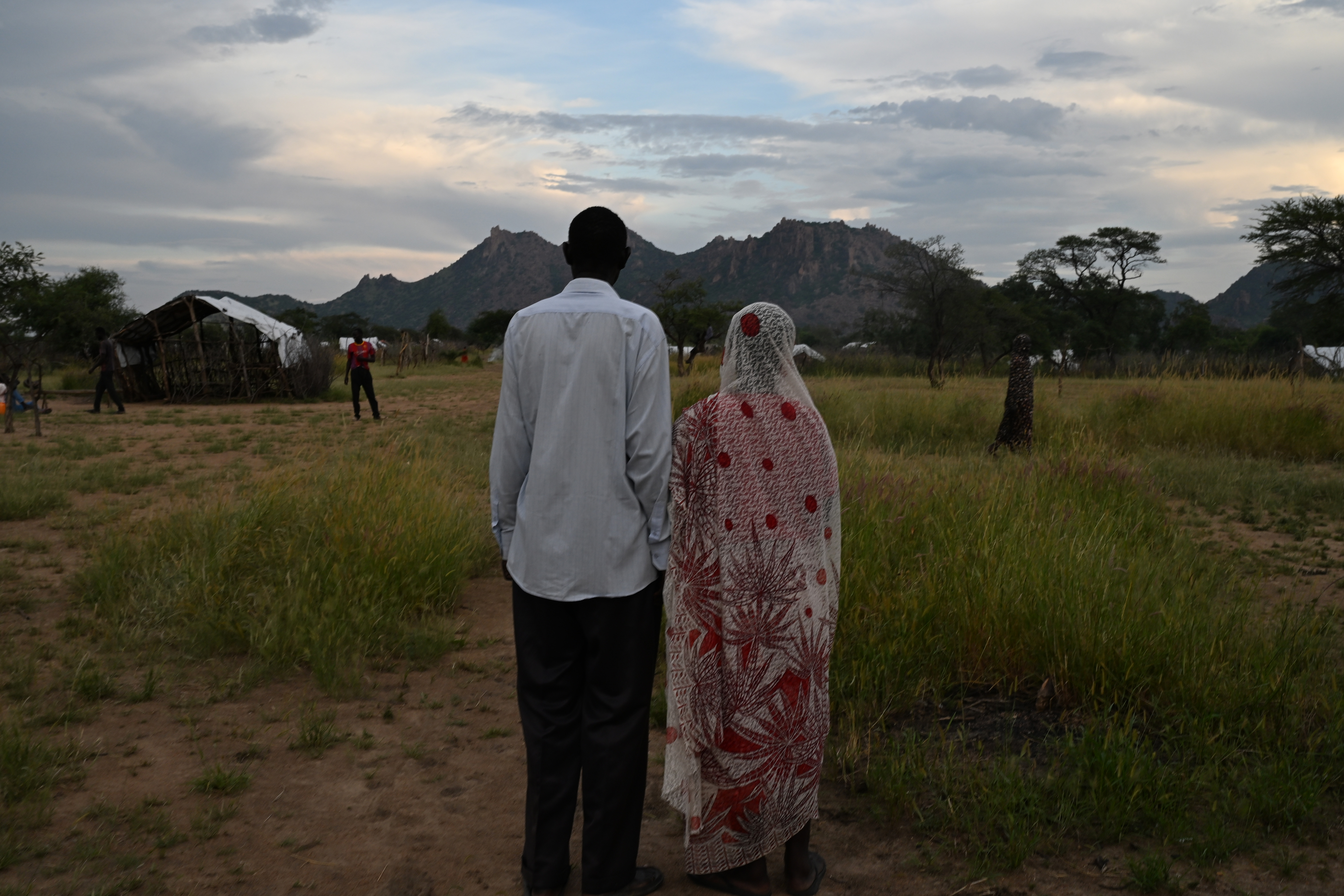
Intisar and Wanis, displaced parents of seven, look at the Kulbunia mountain, which looms over the al-Hilu camp in Dilami County, Sudan. Intisar and Wanis were forced to flee their home with their children after the civil war broke out in Khartoum in April 2023. “This is my land," Wanis said. "If I die, I will die in my land.”

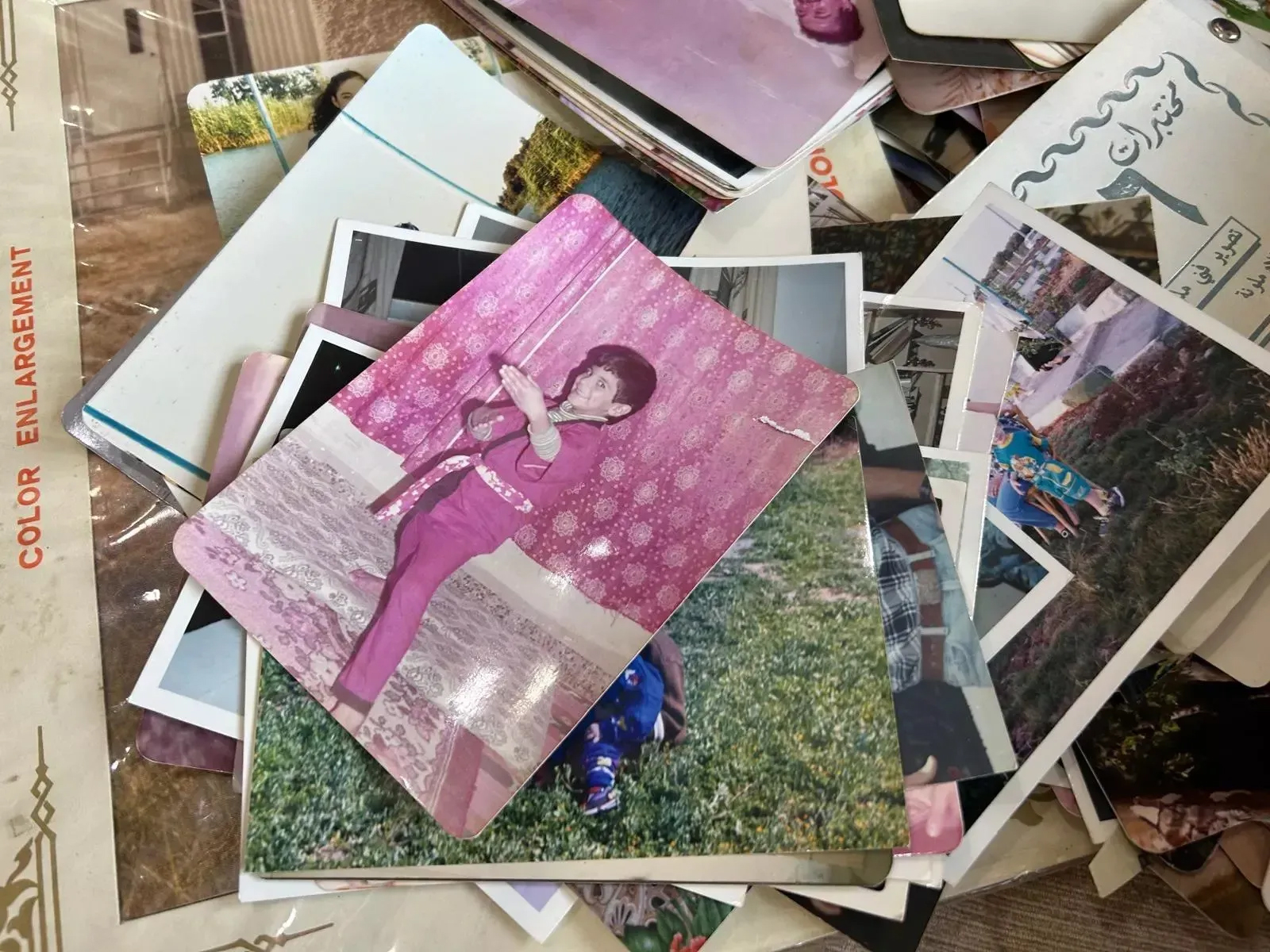
Adham Aljamous' childhood photos from Syria, the only physical memories he has of his past. Aljamous, 32, fled Syria over a decade ago along with millions of Syrians now living in exile. With the fall of the Assad regime in December 2024, many Syrians face a chance to return, unsure of what's left of home.
"In June 2025, I traveled to southern Turkey to meet Syrian refugees living near the Turkey-Syria border. I wanted to answer one question—six months after the fall of the Assad regime, were they ready to return home? The answer ...was... complicated. Every family I spoke to more or less said they wanted to go home. But it turns out, the longer you stay away, the harder it is to go back.
One woman, an activist whose friends and family were tortured—even killed—during the war, put it to me this way: can home every really be home again once it's been ravaged by civil war? When walking in front of your old house brings up PTSD, memories of friends tortured and killed by the regime?"
Rebecca Rosman

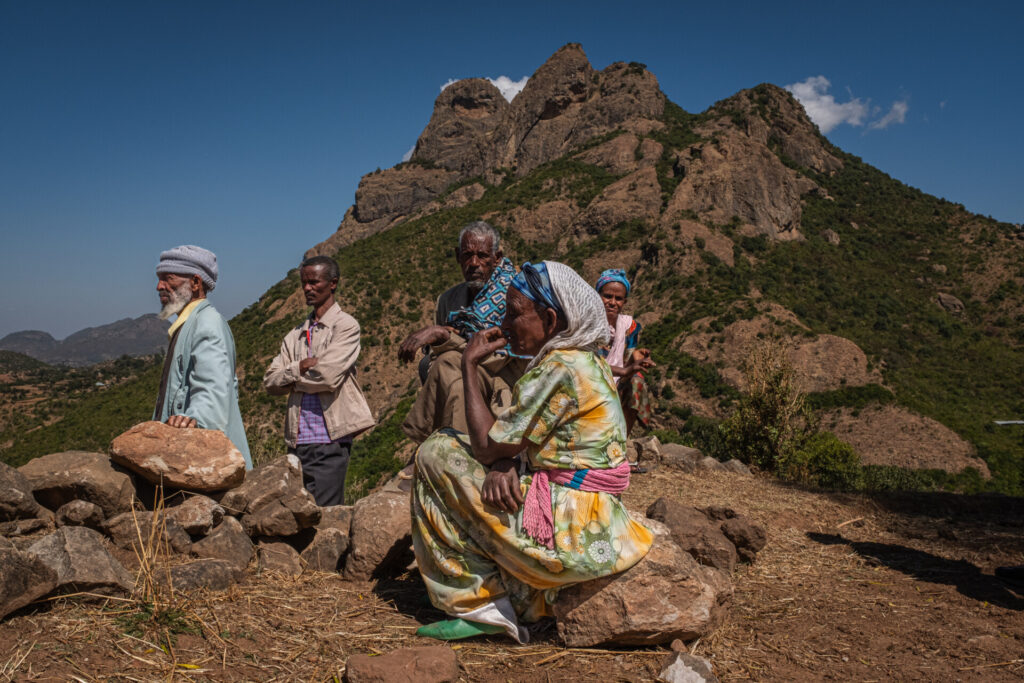
The Gebre family near their home at the Garima monastery in Ethiopia, overlooking the valley where their sons and grandsons were killed near the end of the Tigray war. During the war, Eritrean soldiers used Garima periodically as a base from which to launch attacks against the Tigray Defense Forces. A total of 113 civilians were executed by retreating Eritrean soldiers in the Garima massacre, atrocities that have gone largely unreported. The massacre has deepened a sense of absence that has settled over the community, despite the end of the war.
.avif)
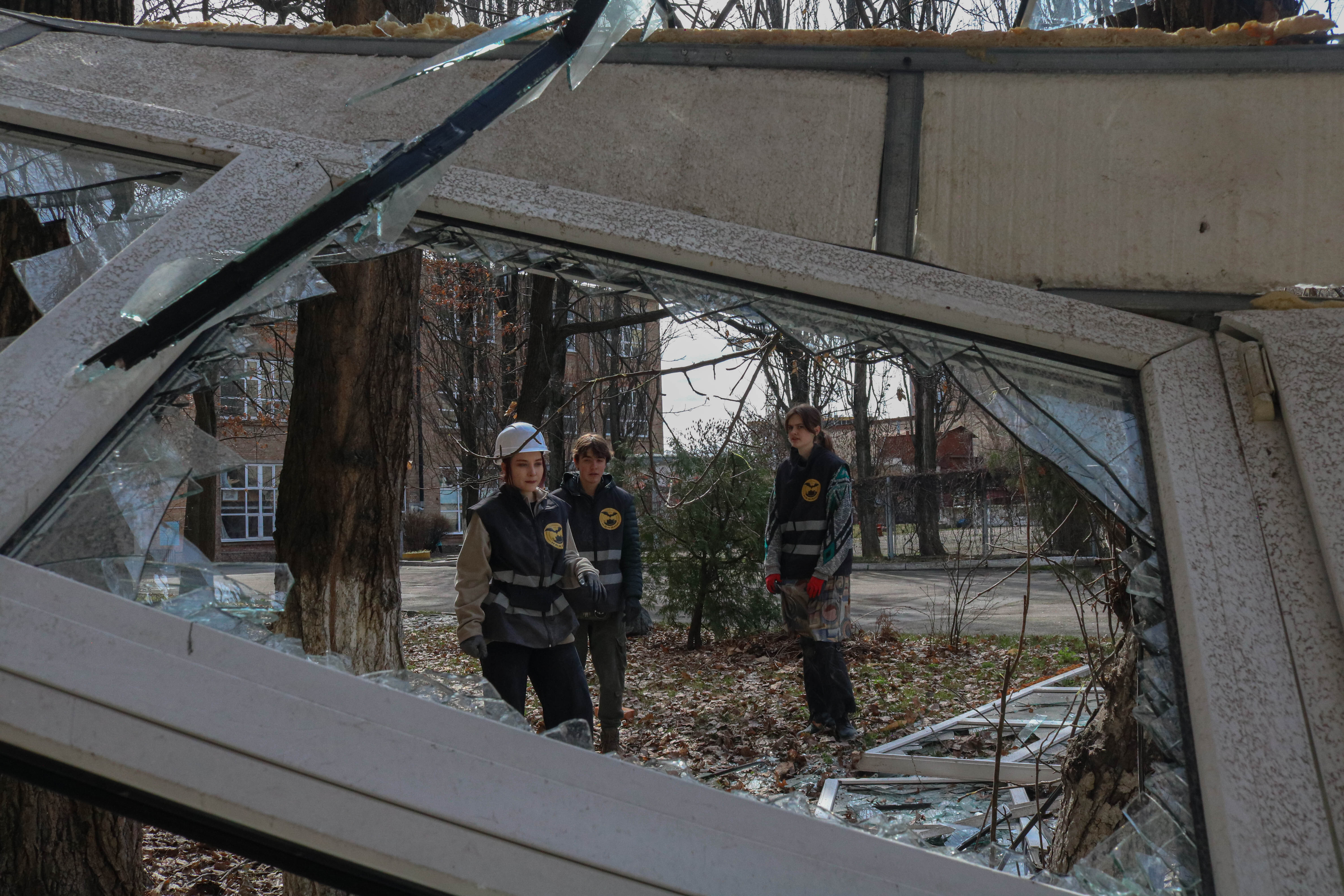
An April 17 drone strike in Dnipro, Ukraine, killed three people and heavily damaged Dnipro State Medical University. Since the war with Russia began, Ukraine has mobilized academic research groups in hopes of achieving a technological edge over its much larger and better armed enemy. With Russian forces having repeatedly targeted the nation’s military R&D centers, the government has pressed wide swaths of Ukraine’s civilian science infrastructure into service to conduct military research.
"Working with these Ukrainian teenagers was a humbling lesson in their resilience and the profoundly unjust reality of what surviving this kind of brutality long term is doing to an entire generation. But I was constantly inspired by the Ukrainian's youth's strength, determination not only to survive but to thrive, and commitment to helping each other and their communities.
It was especially important to me to get to meet young Ukrainian photographer of immense talent Anna Donets, and end up not only photographing her and her friends but being able to publish her excellent and committed photography alongside my own in Rolling Stone Magazine."
Natalie Keyssar
"This is the reality of life here—we live in constant contrast, and it is evident in every aspect of our daily lives. While working on this series, I experienced the same emotional contrasts, from tears to laughter. In fact, I never planned for these images to become a single series; I was simply documenting everything around me, collecting moments of life during the war in Ukraine.
Photography is one of my personal ways to help Ukraine. I often say that I want to be “the voice of Ukraine to the world,” and that is exactly what I am trying to do—to show the world what is happening here."
Anna Donets
.jpg)
The area around Grand Cemetery in Port-au-Prince is controlled by a gang led by a man called Tilapli. Armed groups are thought to control about 90% of Port-au-Prince. In the areas surrounding Haiti’s cities, they are burning crops, killing civilians, and forcing families to abandon their land for makeshift hillside shelters and an uncertain future. Since 2022, more than 16,000 Haitians have been killed in gang-related violence. Over 1.4 million people fled their homes in 2025.

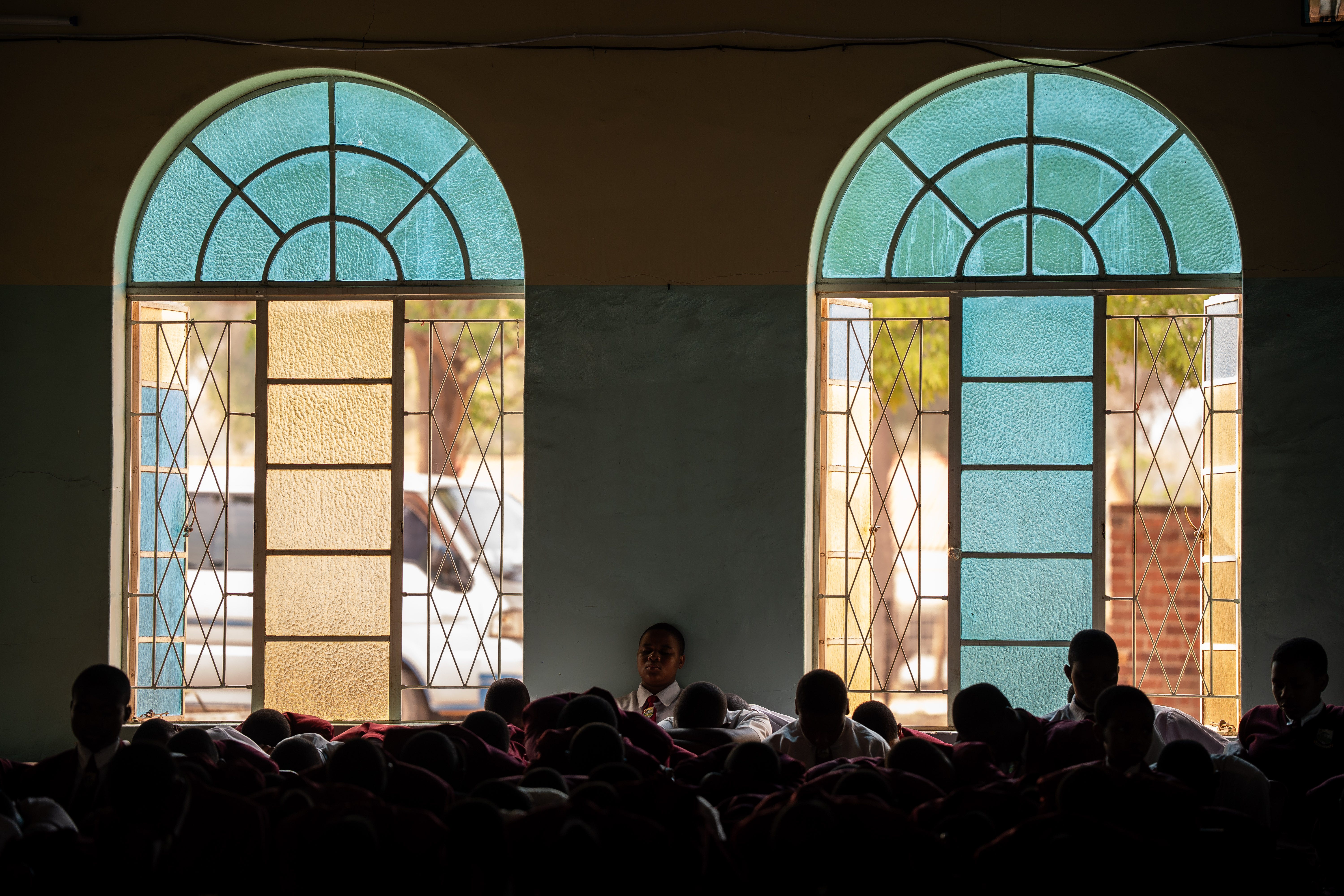
Murewa High School students pray during a service at the Murewa Centre Mission United Methodist Church (UMC). A splintering in the denomination—often centered on a debate about LGBTQ+ rights in the church—cost the denomination more than 7,500 churches in the U.S., and the conflict has now escalated in Africa. The UMC’s international presence, through schools like the Murewa mission, bears profound visual significance. That matters for whether the church in these regions fractures.

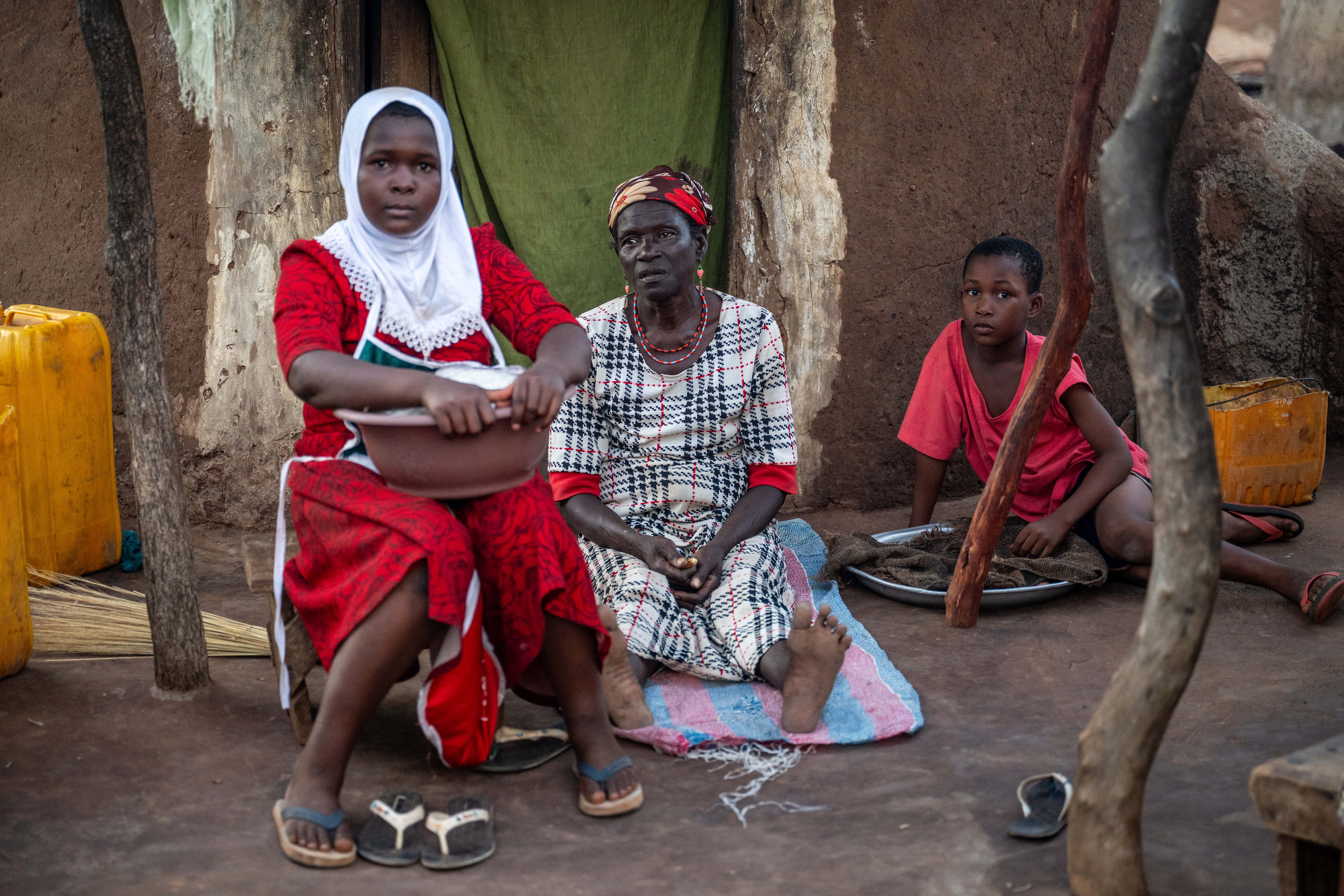
Ghana’s six remaining “witch camps”—in places like Gambaga, Kpatinga, Gnani, and Nabuli—are often described as sanctuaries. In reality, they are sites of forced exile. Children who arrive with their mothers or grandmothers are often bullied in school or pulled into street work, stigmatized as “witches’ children.”
.jpg)
The Indigenous people of Papua, like Romanus, are organized into clans, who manage their land collectively in Indonesia. The light touch of their livelihoods has left Papua with some of the largest tracts of intact rainforests in Asia and biodiversity to rival many places on Earth. But now, that land is in the crosshairs of a massive “food estate” program, driven by Indonesia’s president, which aims to create more than 1.6 million hectares of rice fields and sugar plantations.

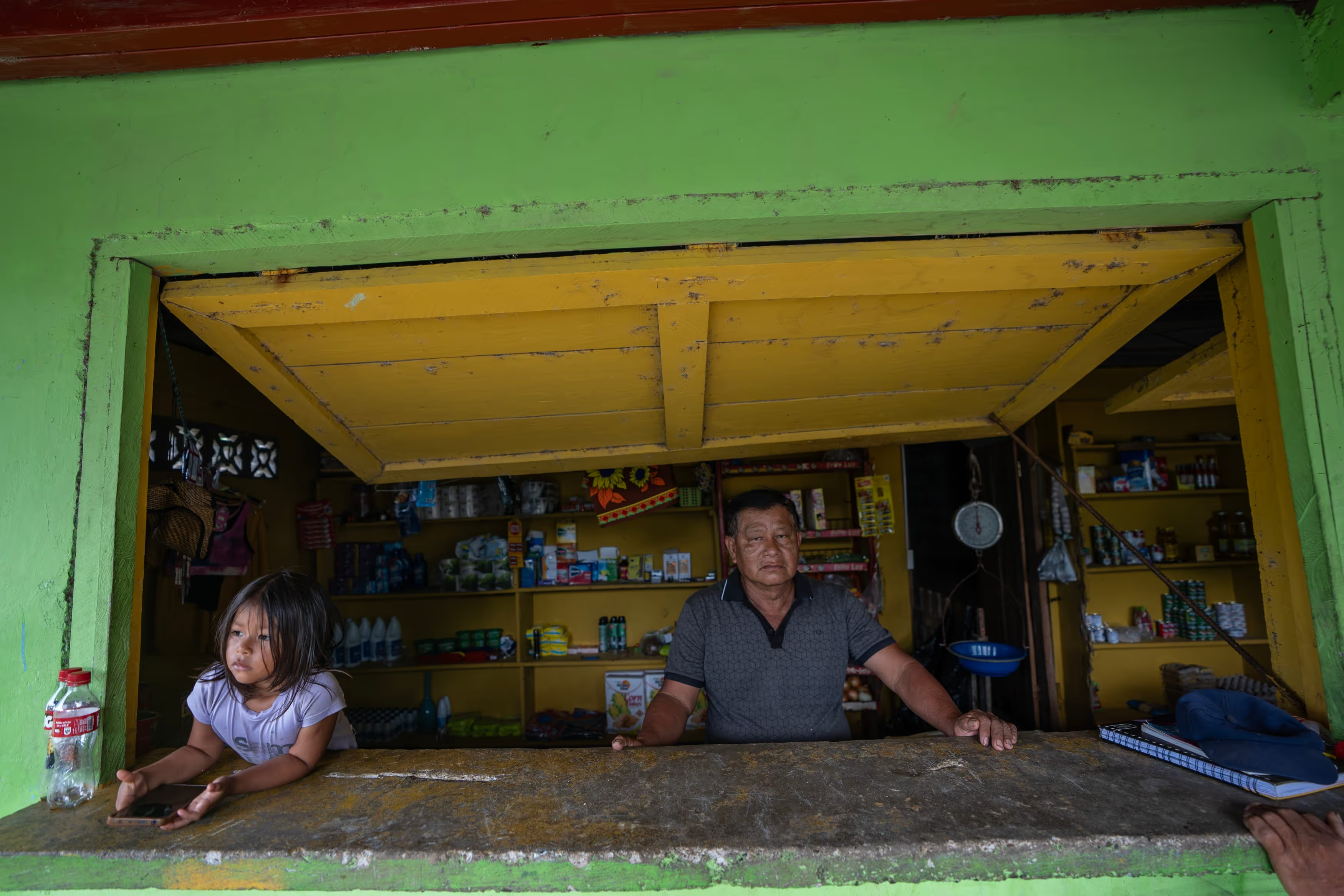
The Indigenous village of Bajo Chiquito, Panama, a former way station for migrants, experienced an economic boom from the influx of migration through Panama’s Darién Gap. Almancio Chango Rosales stands inside his small store, which he opened to cater to an influx of migrants headed for the U.S., but immigration crackdowns stemmed the flow of migrants, and sales at the store have plummeted.

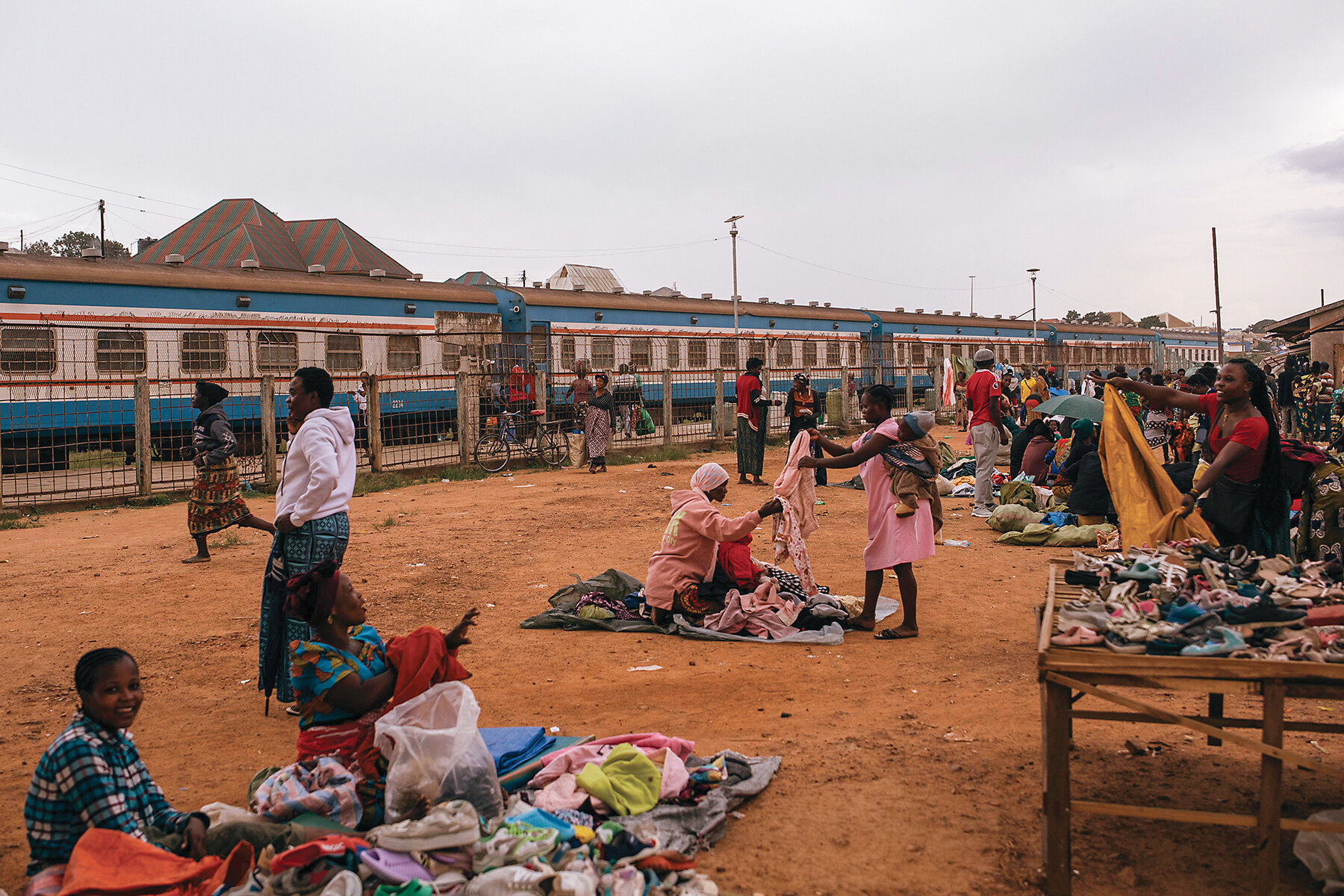
The plan for the Tazara Railway was put forward in the 1960s by two leaders: Kenneth Kaunda of Zambia and Julius Nyerere of Tanzania, who wanted to connect central and southern African states to the Indian Ocean. When Western countries and the World Bank balked at the cost, China stepped in with not only funds but also equipment and expertise. The railway was China’s largest foreign aid project at the time, and Beijing has pledged at least $1 billion to revitalize the decades-old rail line. Pictured here, passengers wait in a market area of Nakonde Station in Tunduma, near the Tanzania-Zambia border. The train runs 1,852 kilometers (about 1,150 miles).

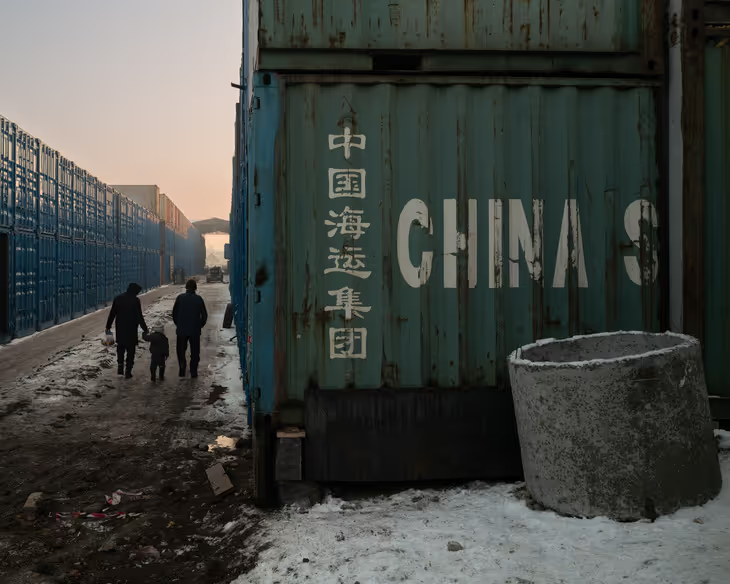
The monumental Belt and Road Initiative, launched in 2013 by President Xi Jinping, has significantly increased Xinjiang's strategic importance. The northwest Chinese territory, a human rights black hole and a crossroads for hydrocarbon routes, has established itself as the gateway to the booming Central Asian market. Behind the multi-billion-dollar contracts, political allegiances are also being traded. Containers from China are stored in the Dordoi market in Bishkek (northern Kyrgyzstan), one of the largest bazaars in Central Asia, on January 13, 2025.

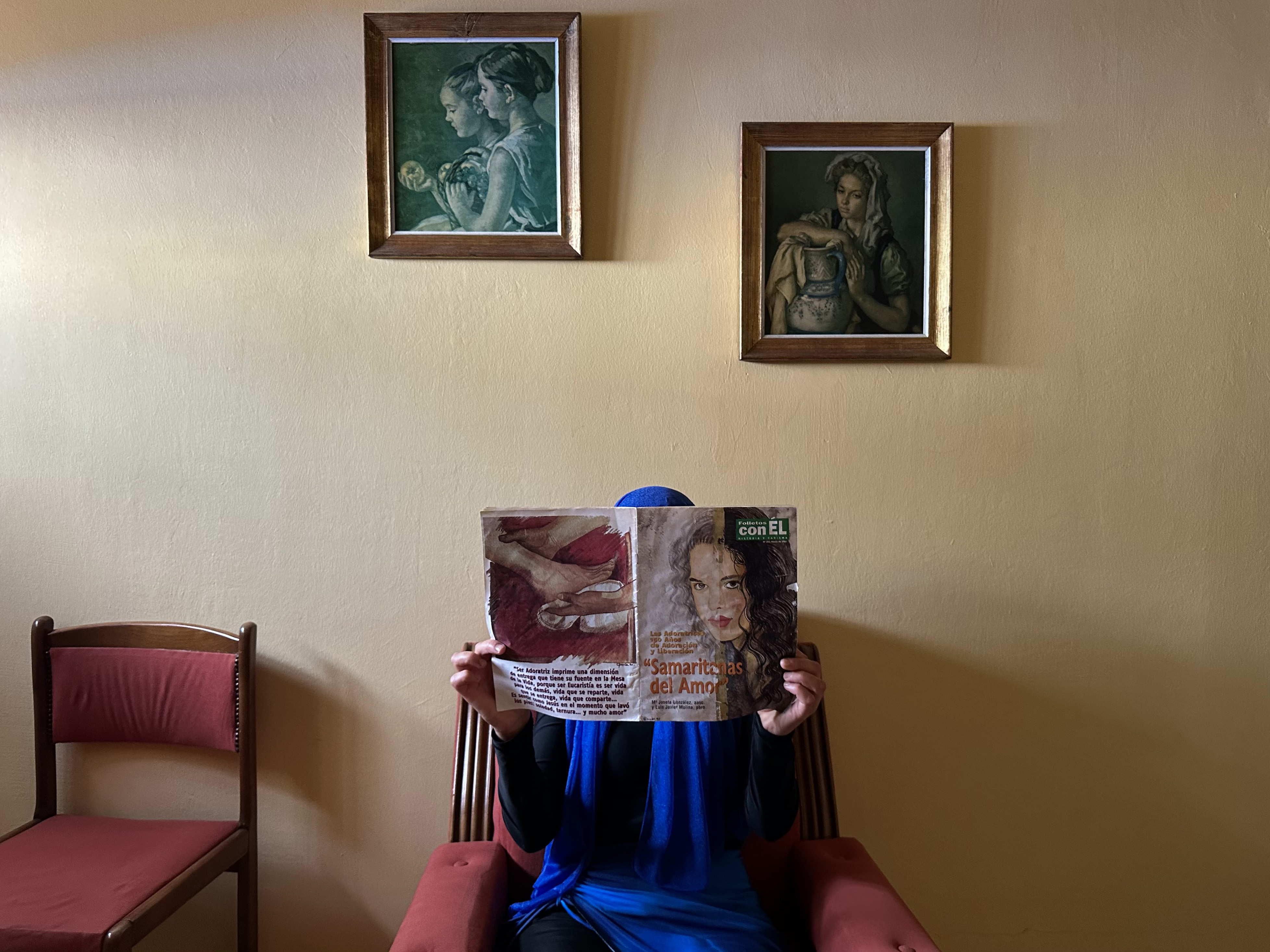
Survivors make up a community of Moroccan women who have been exploited into domestic servitude through marriage and migration. By crossing to Ceuta, Spain, they lose their livelihoods and agency at the border. A woman who’s going by the name Naima, to protect her identity, is shown behind a magazine titled Samaritans of Love. She spent 15 years trapped in an abusive marriage in Ceuta. Two years ago, she left and sought help.

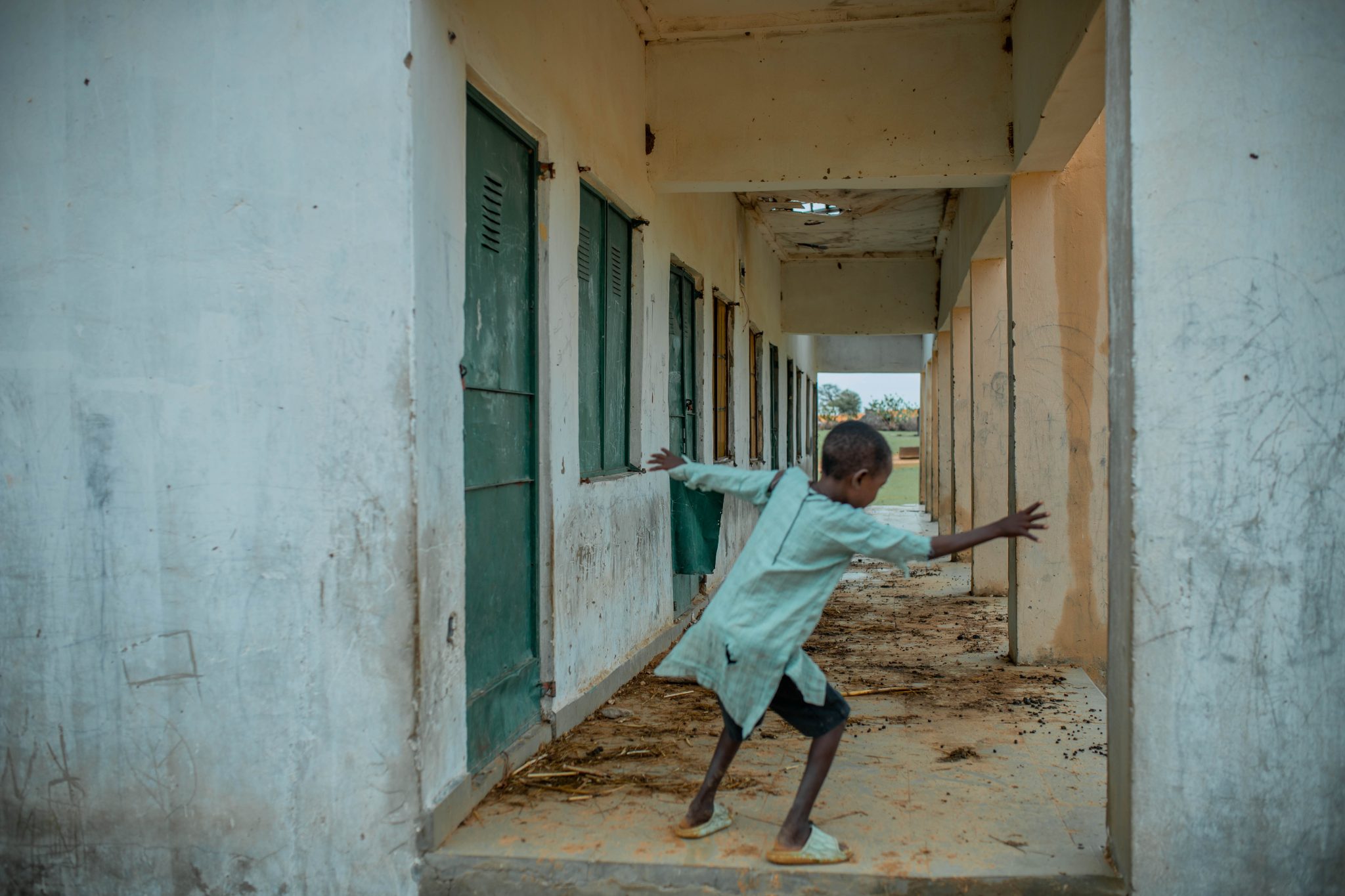
Over the past four decades, the Sahara has expanded by nearly 10 percent, pushing its southern edge steadily into the Sahel. In Nigeria alone, desertification currently threatens 11 of the country’s 36 states, with dunes advancing at an estimated 0.6 kilometers per year. In Bultu Briya, desertification has seeped into the very veins of the villagers’ lives. Runoff washes through the encroaching sand each rainy season, leaching minerals like potassium into the water and leaving it contaminated, according to villagers, who claim it has made the water poisonous. Bultu Briya was not always like this. Half a century ago, the Sahara Desert stopped far to the north, and life here followed the rhythm of the rains.

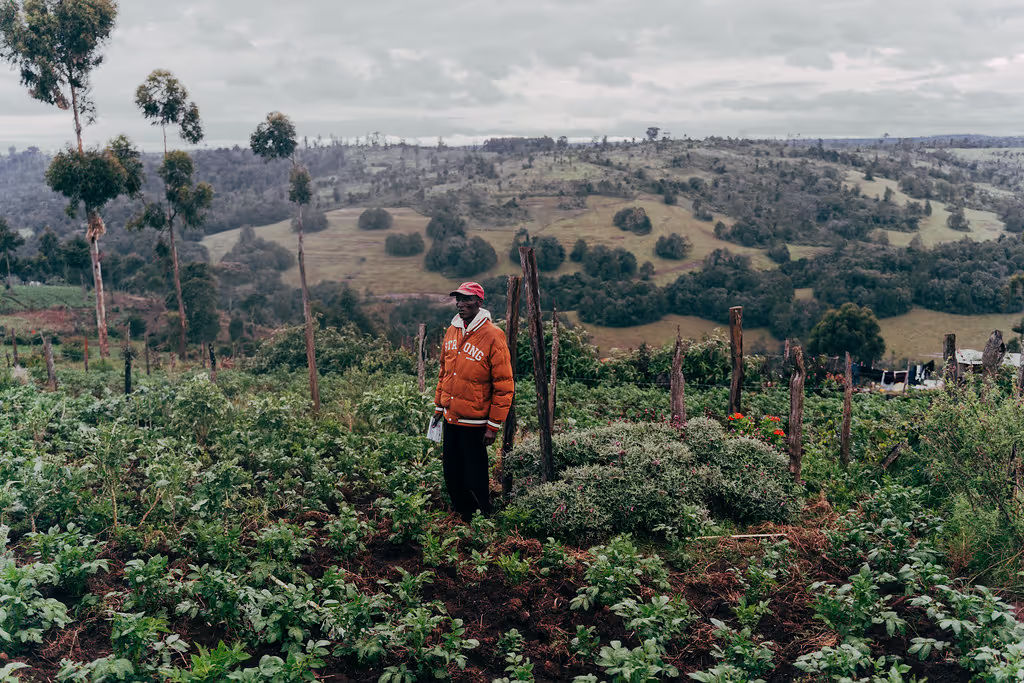
In November 2023, people in the Indigenous Ogiek community were evicted from their homes in Kenya’s Maasai Mau Forest. In May 2025, Kenyan President William Ruto put the land, measuring 250,000 hectares, in a trust and issued the title deed to the Narok County government. In Kenya, the details regarding the deal were never made public, however, many Ogiek believe the government plans to sell carbon credits from the Mau Forest, and evicted them to do so. A man named Ngusilo fundraised to buy a small piece of land in Olokirkirai on which to bury his son, who died crossing the river because his family had been evicted.
.avif)
The grave of HardiQuinn Hill, 9, sits adorned with weather-beaten gifts. HardiQuinn was one of more than 1,200 Texas children who died from abuse or neglect between 2018 and 2023.

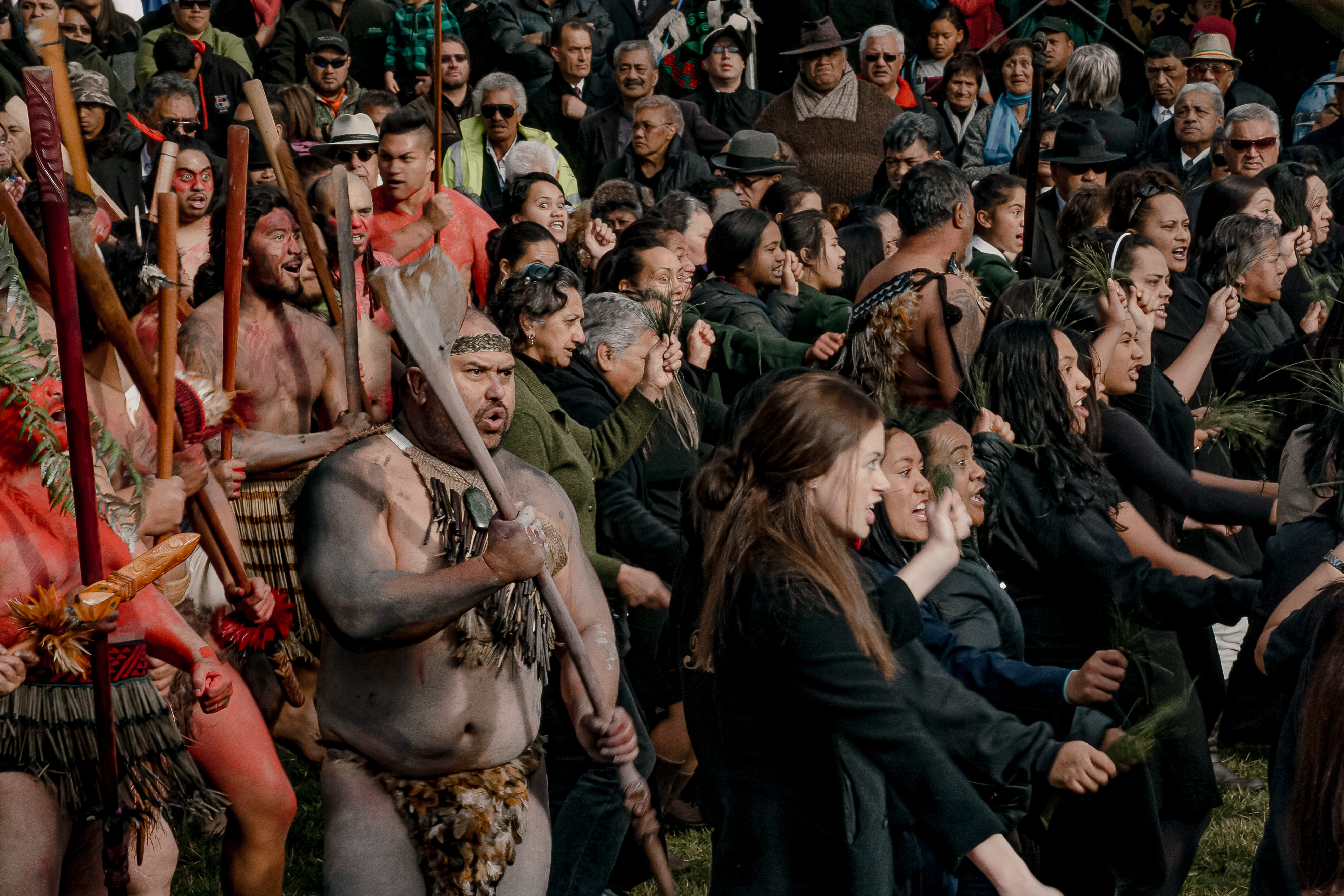
In 2014, at a ceremony in Tāneatua, the New Zealand government formally apologized to Tūhoe for a slew of historical injustices. The settlement included innovative provisions for the governance of Te Urewera, the iwi’s homeland. In the 11 years since the deed of settlement was signed, reconnection to the iwi (tribe) and to the land has been dominant in Tūhoe decision-making.

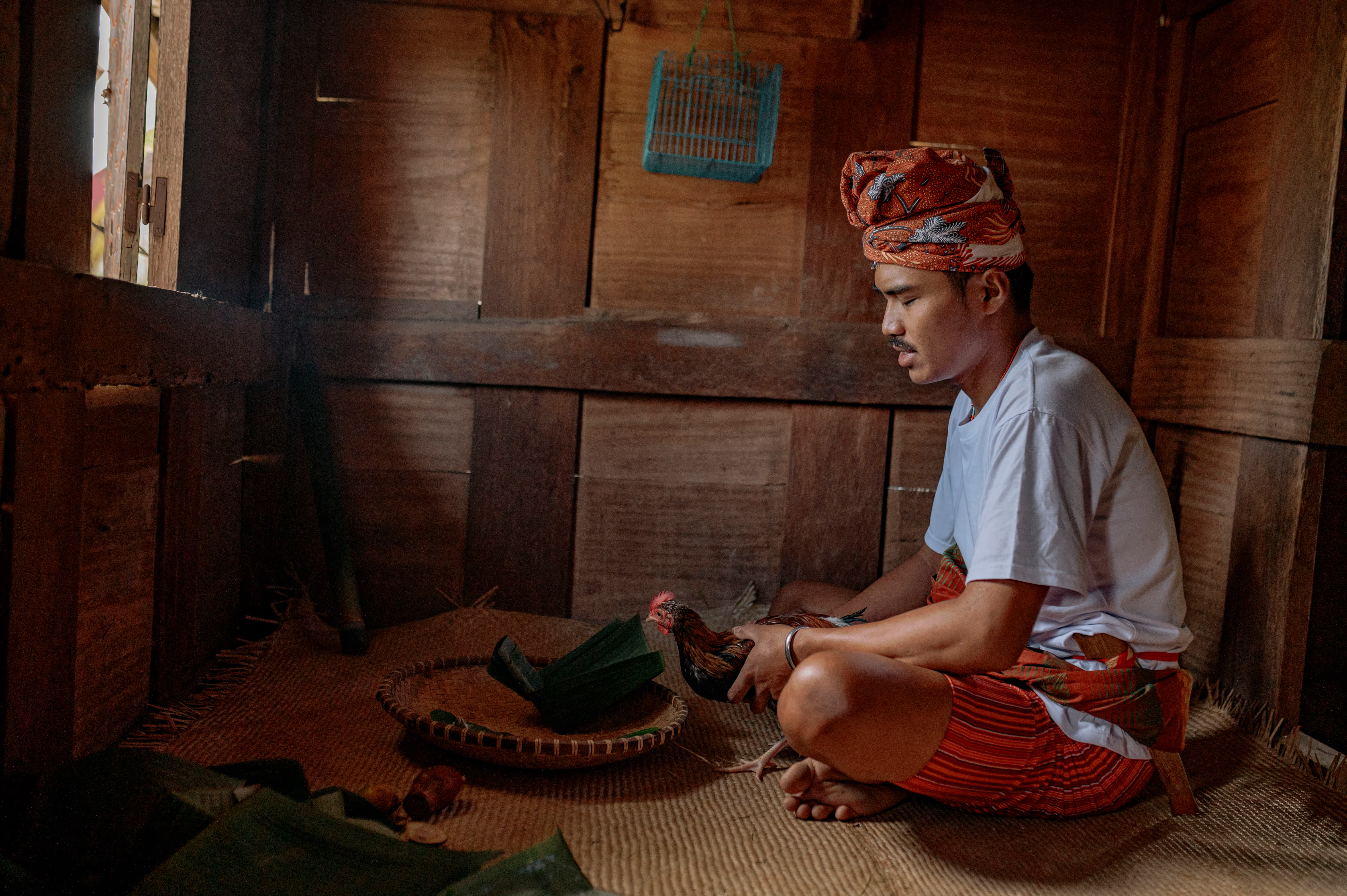
The communities in South Sulawesi, Indonesia, believe nature and its inhabitants are one and the same. Laurensius Kevin, 21), pictured, recites several prayers before slaughtering a chicken during the Kallode-lode ritual in Tana Toraja in November 2024.

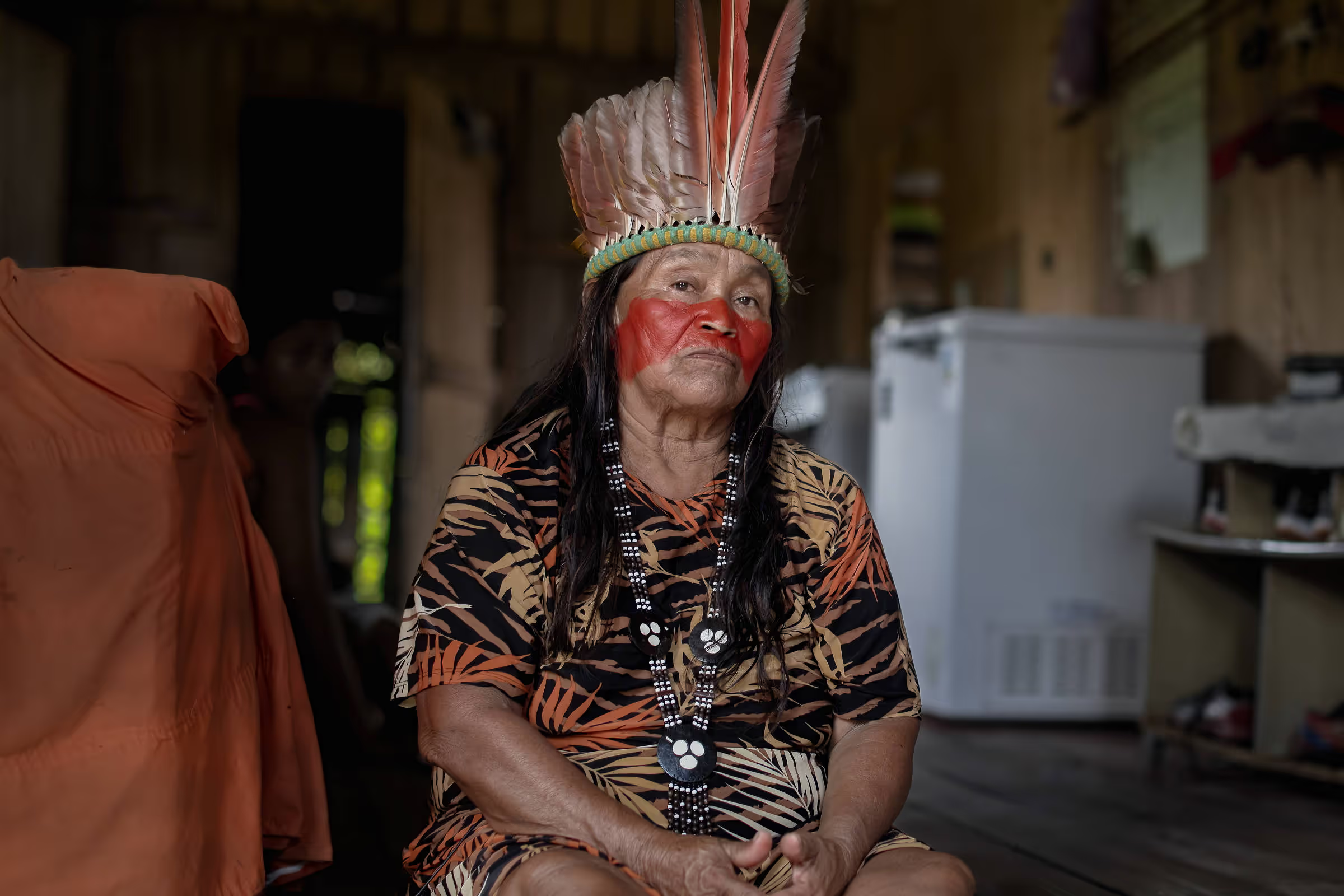
Despite laws protecting uncontacted communities, evangelical Christian missions employ many methods to spread their message, including on secret audio devices left in the forest. It is a curiosity that has become a source of amusement for the Korubo community and its matriarch. How it reached them is unclear. What is clear is that similar devices, called the Messenger, have been used to spread religious messages, despite proselytising being prohibited among uncontacted and recently contacted peoples, according to Brazilian law. Messenger devices are distributed by the U.S. Baptist organizationIn Touch Ministries, based in Atlanta.
"There are lives that create experiences and moments of change, and there are moments that change our lives. My first contact with the Korubo people felt to me like paradise on Earth, and living and sharing moments with them undoubtedly changed my views on things. The creative process itself slows down and enters a rhythm dictated by events and daily life, without rules or pre-choices. Things happen and are gifted to you to observe and photograph, but for that, you have to be open-hearted and open-minded, in sync with the Korubo and the Forest."
Paulo Mumia

Federal lawmaker Zezinho Barbary used public funds to build a road that cut through the Amazon rainforest illegally and crossed his family’s land while he was mayor of Porto Walter, Acre. The project, carried out with heavy machinery purchased through congressional earmarks, logged forest areas and invaded Indigenous territory. Now a congressman, Barbary has allocated new funds to regularize the same road, named after himself, despite the environmental crimes. Chief Esmeralda Silva Moreira, leader of Aldeia Nova Vida 2, filed a report in 2019 to the Federal Public Prosecutor’s office about the road.

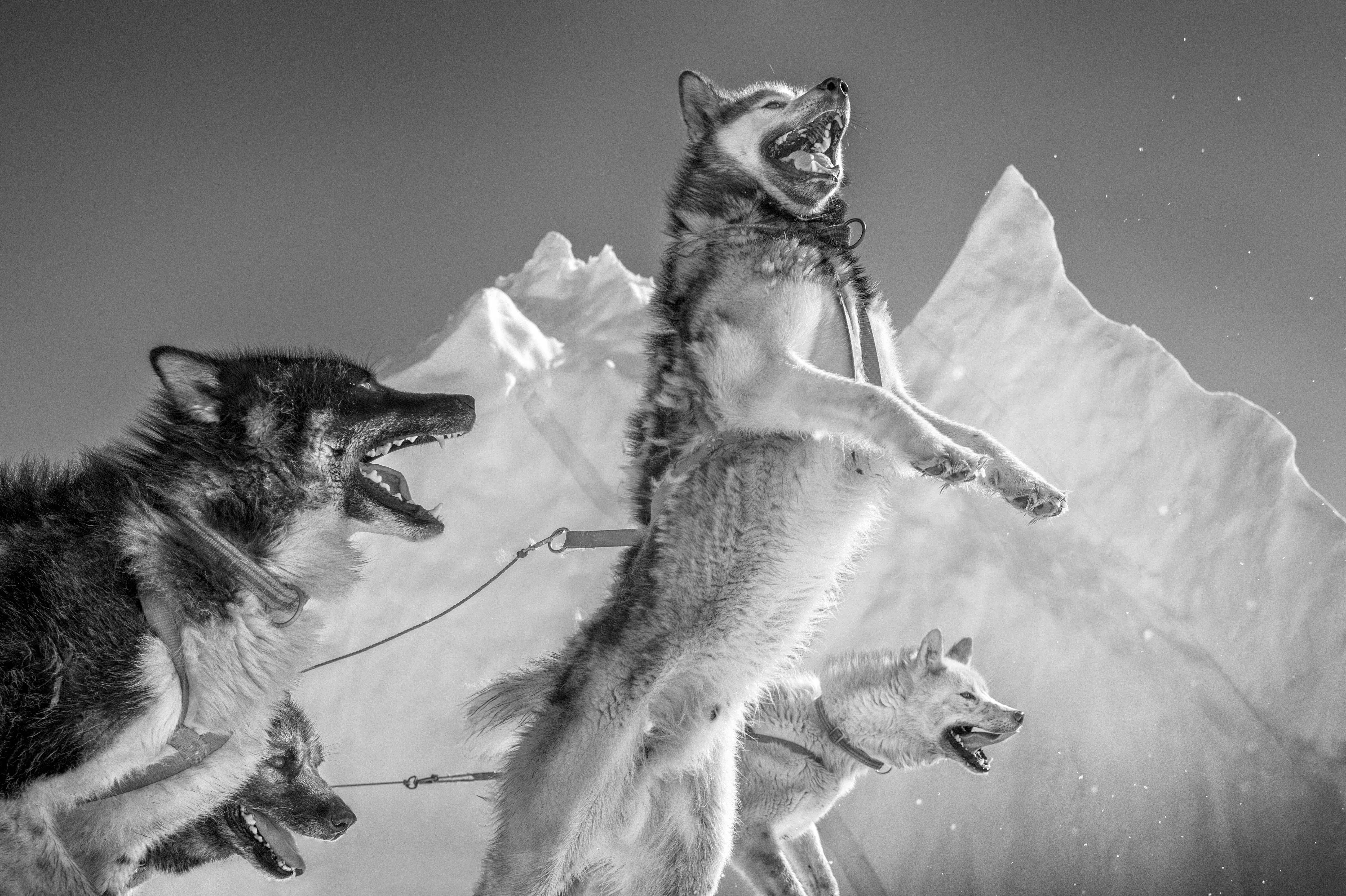
From Alaska to Greenland, traditions that sustained the Inuits for many generations in some of the world’s most hostile conditions are vanishing along with the ice. In the past, a hunt by dogsled could last more than a month. But the days of the long hunt are over, and the warming of the Arctic has shortened the window in which polar bears can be pursued on the sea ice.

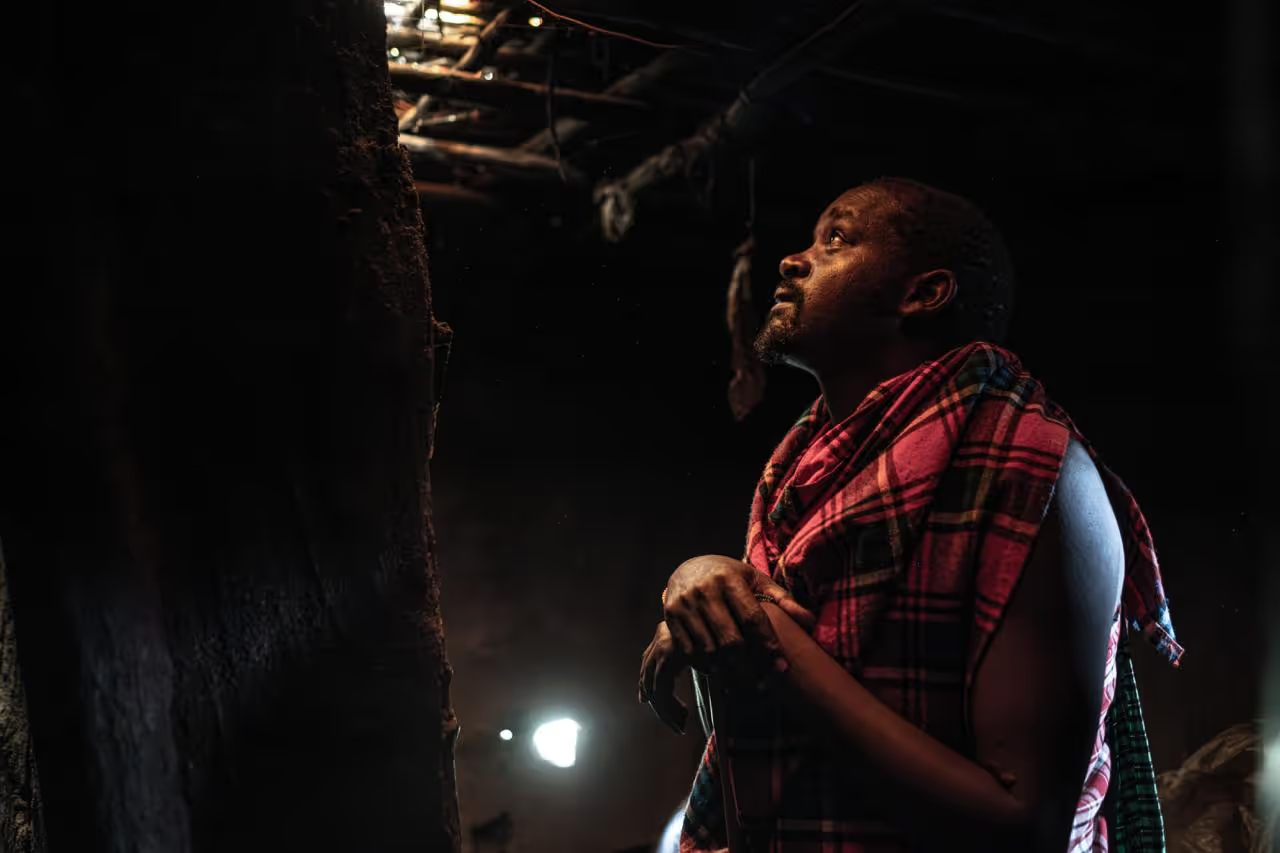
For Moses Oleshengay, a 77-year-old Maasai elder from Endulen, history is repeating itself with tragic familiarity. In 1959, as a young man, he was forcibly relocated from the newly established Serengeti National Park. He and his community were promised a permanent home in the Ngorongoro Conservation Area. Today, he faces the same threat of eviction from the land that was meant to be his last refuge. The pressure to relocate has been systematic and deliberate and the consequences are devastating. Authorities plan to relocate at least 70,000 people. Shown inside his home, Saitoti Parmwad, a member of the village of Ololosokwan, recounts taking part in clashes with security forces during the evictions for the creation of the Pololeti Game Reserve.

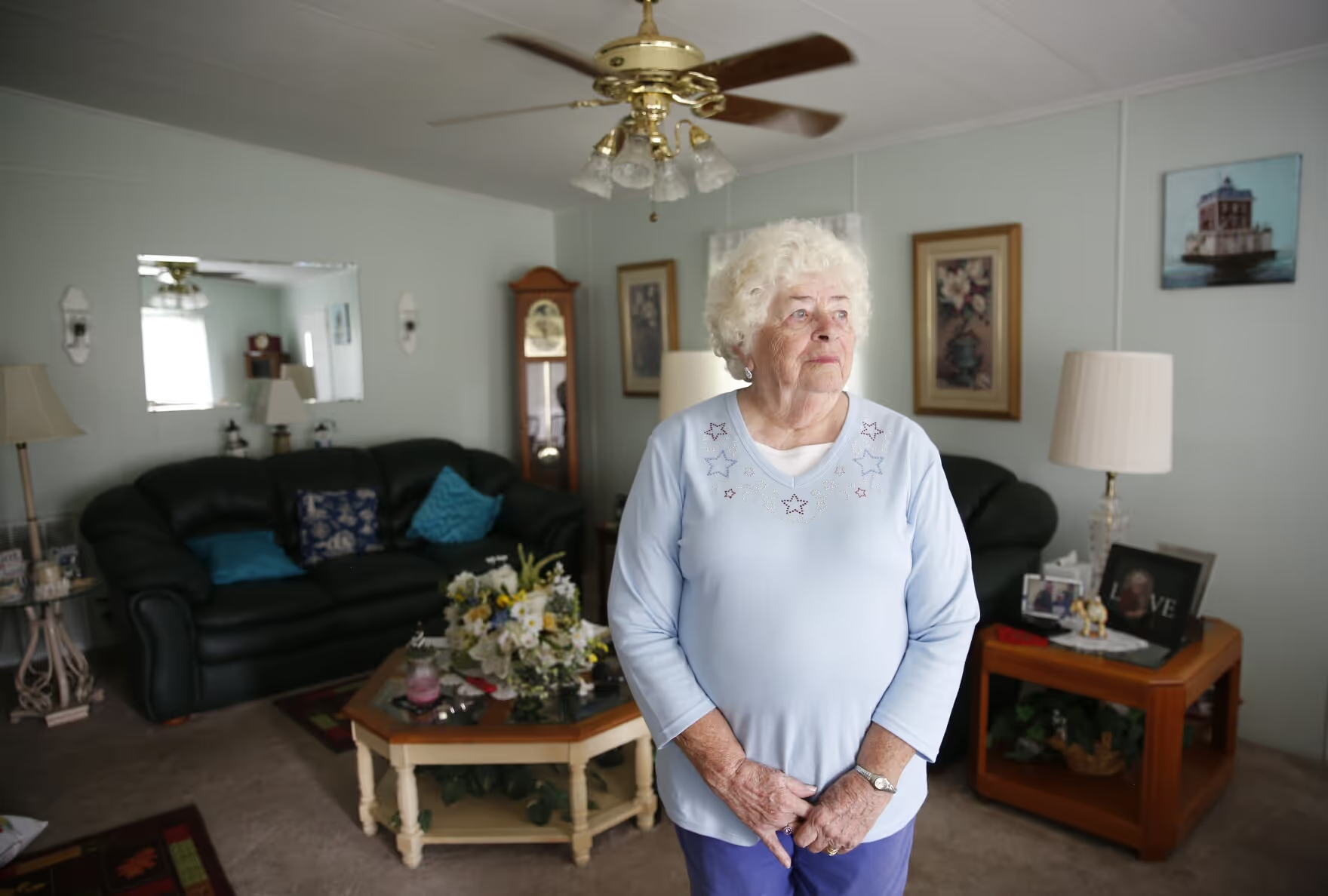
Rising lot rents are quietly pricing Floridians out of their communities. Judy Schofield, 86, a retiree who moved from Connecticut to the Royal Palm Village community in Haines City, Florida, took on a part-time job to help keep up with her bills due to rising lot rent.

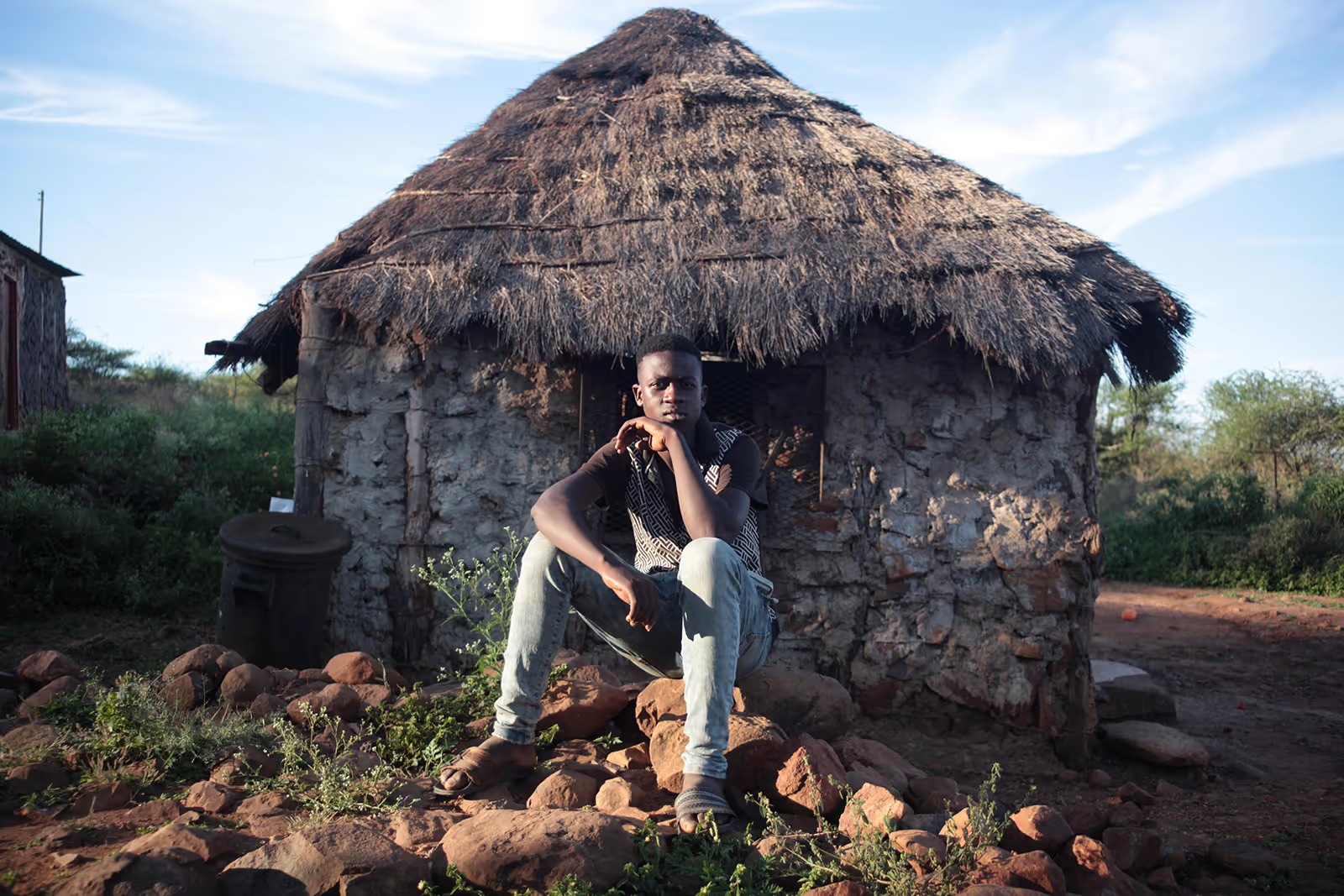
Eswatini, a small landlocked country formerly known as Swaziland that shares borders with South Africa and Mozambique, has long had the unfortunate distinction of having the world’s highest percentage of adults living with HIV. Siyabonga Nyawo, a 16-year-old in Eswatini, lost his mother to AIDS after she transmitted the virus to him at birth. He bounces between his grandmother’s home (shown here) and a place he shares with an older brother. Nyawo has been helped by a program funded by the U.S. President’s Emergency Plan for AIDS Relief (PEPFAR), which transported children to clinics once a month to pick up their drugs, receive a free meal, and meet other teens living with HIV. The program lost its PEPFAR funding and Nyawo doesn’t have the money or the motivation to find his own transport to the clinic. He has stopped taking his medication.

Tim Rich is lifted out of the water by Stephen Linke as he is baptized during an evening candlelight vigil held for assassinated conservative activist Charlie Kirk on September 14, 2025, in Marion, Illinois. In the aftermath of Kirk’s death, Pulitzer Center grantee William Freivogel’s analysis found immense pressure on the First Amendment through lawsuits and regulations from the Trump administration.
"When I watched the line for baptisms grow by the minute, I really then began to understand the impact. I made this image while reporting on a vigil for Charlie Kirk shortly after his assasination in a southern Illinois town. When I arrived, I was surprised to find that they were also baptizing people in a pop-up pool in the middle of the town square. Through this reporting I understood the severity of impact this had on people, and how real the overlap of religion into politics is in rural America. I was expecting breaking-news reporting and stumbled across a more spiritual event."
Lylee Gibbs
.jpeg)
A boy throws ice into the sea in Nuuk on March 11, 2025. Greenland guards access to the Arctic at a time when melting sea ice has reignited competition for energy and mineral resources and attracted an increased Russian military presence. Separatists fear President Trump’s aim to take control of the Danish territory may block their path to independence.